Read down the kata syllabus on the dojo’s site and the list ends with a name that looks different from the rest: Tokumine no Kun. Every other entry is an empty-hand form. This one is a weapon form. If you have trained for a while you may have wondered why a karate dojo keeps a staff kata at the bottom of its list, and what the dojo’s “weapons” training actually involves.
This post follows that one name. It draws on the dojo’s own site, a published interview with Seibukan’s Supreme Sensei, and a plain reference on the staff itself. It is written for members and the curious, and it marks where the trail stops. Dojo facts are from its own site, checked in October 2026.
What the dojo’s site says
Weapons appear twice on the IOSSKA-NZ site. The Black Belt & Advanced program is described as “Deep study of Seibukan kata, bunkai and weapons for senior students”. And the Chief Instructor and Technical Director, Sensei Prinkal Nizama (Godan), is listed as holding a kobudo black belt. Kobudo is the Okinawan weapons arts. Beyond that, the site says nothing about which weapons are taught or when. We looked at the same gap in our post on the Black Belt program.
The one concrete pointer is the kata list. Among the forms the dojo lists is Tokumine no Kun.
What “kun” means
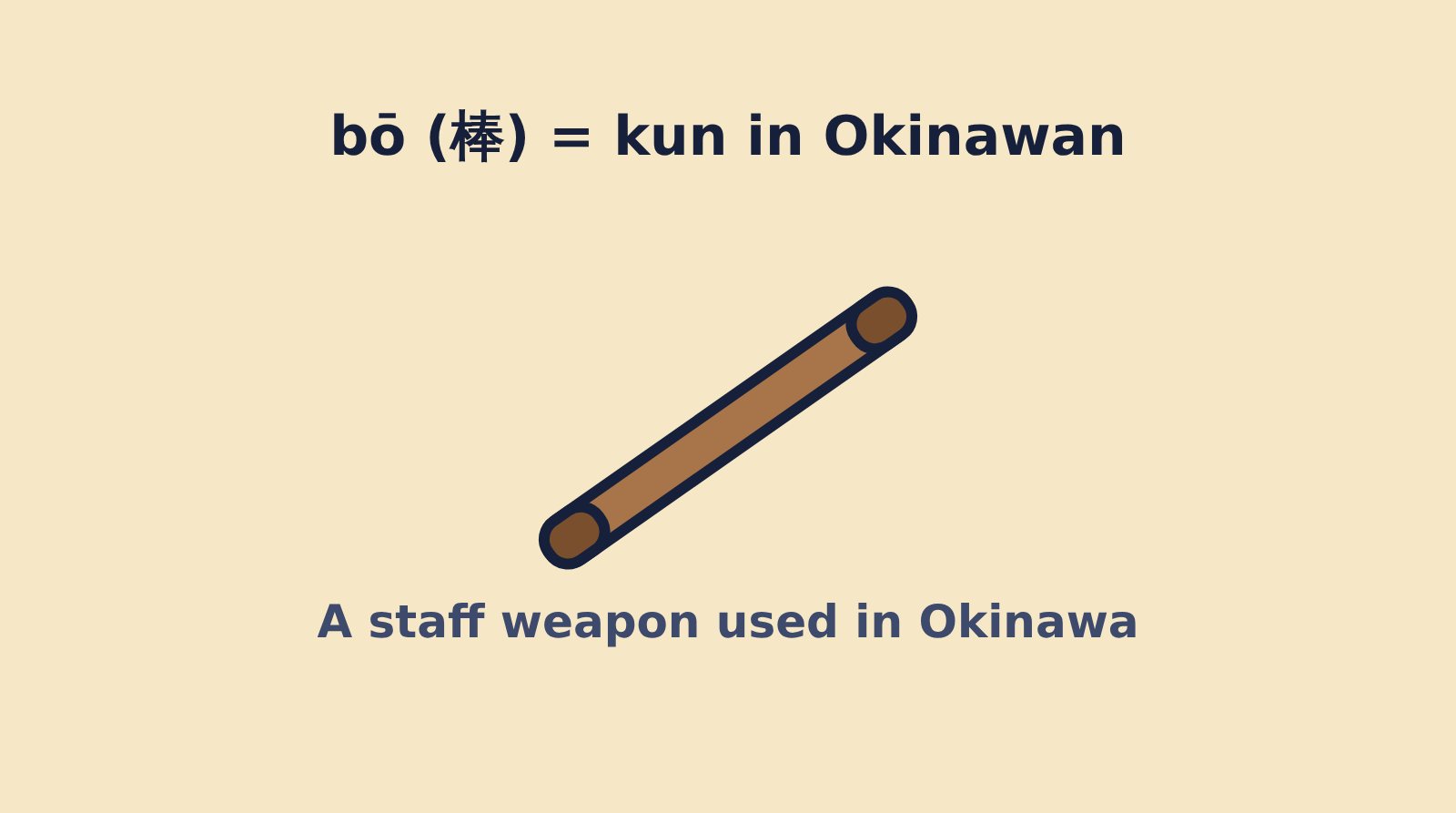
The word is a clue in itself. Wikipedia’s entry on the bō opens: “A bō (棒) … is a staff weapon used in Okinawa.” Alongside its other names it gives the Okinawan one: kun. So Tokumine no Kun reads, in plain words, as a staff form with the name Tokumine attached. The same entry says the rokushakubō is typically around 1.82 metres (72 inches) long.
What Zenpo Shimabukuro says
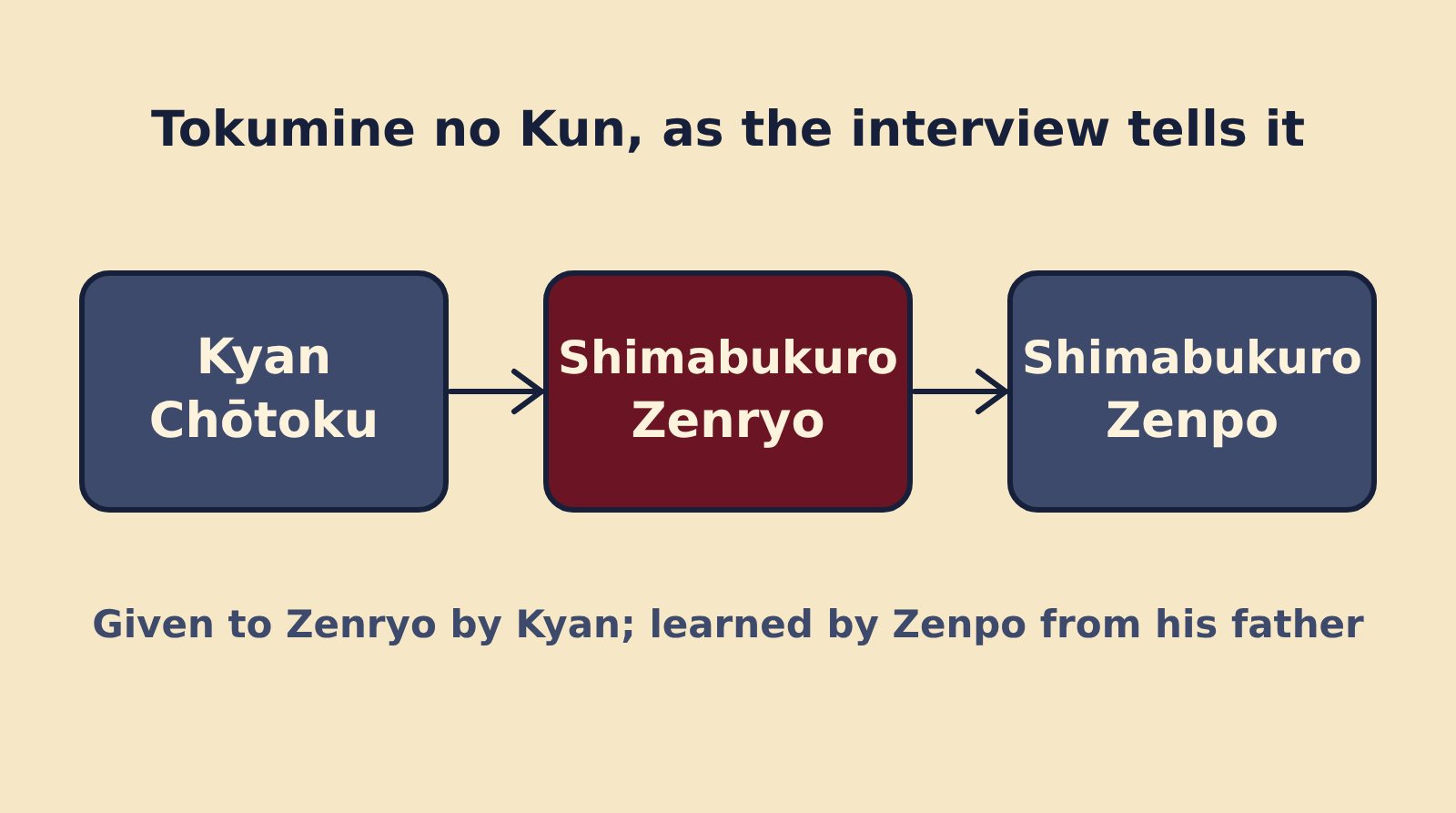
The clearest account of weapons in Seibukan comes from the Supreme Sensei himself. Dragon Times published “The Karate of Chotoku Kyan: Interview with the Seibukan’s Zenpo Shimabukuro“. Asked whether his school includes weapons training, he says it practises only the bō, and that the Tokumine no Kun kata was given to his father by Kyan. He adds: “We do not stress the bo but we have kept it as part of our culture.” And he says the bō is “very good to help with the body development of our karate”.
Read together, that is a measured position. The staff is not the centre of Seibukan. It is a single weapon, kept as part of the line’s culture and valued for what it does for the body. That fits the dojo’s own line, “weapons” in the Black Belt program, and a lone weapon form on a long empty-hand syllabus.
The interview also says Zenpo learned the form from his father: “I also learned the Tokumine no kun kata from my father.” We have used the article for the staff and the handing-on only, and it is one person’s account, not independently confirmed.
The staff and the body
The phrase “body development” connects the staff to the rest of the training. In the same interview, Zenpo says his father taught him kata first and then created a set of kihon exercises to develop them, and that his father introduced kihon renshu, basic exercises, to new students before kata. Our post on tanren looks at that idea of building the body by repetition. On this reading, the staff is another tool for the same job: a long, heavy, awkward object that asks the body to move as one piece. That is our reading, not Zenpo’s words, and the dojo has not said how the staff is used in Ōrākei.
A chain you have heard before
The route the staff form took is the one the whole style took. The dojo’s site records a line from Kyan Chōtoku, through his direct student Shimabukuro Zenryo, who founded Seibukan in 1962, to Zenryo’s son Zenpo, who leads the association today. Our posts on Kyan and Zenryo tell it in detail. The interview places Tokumine no Kun in that same chain: Kyan to Zenryo to Zenpo.
Seen that way, the form at the bottom of the syllabus is not an add-on. It is part of what was handed down, which is a reason it has been kept even though, in Zenpo’s words, it is not stressed.
What we cannot tell you about Ōrākei
The site does not say whether the staff is taught in Ōrākei classes, at which level, with what equipment, or how safety is managed. It does not give a price for the Black Belt & Advanced program or an entry requirement. We will not guess. These are questions for the instructors:
- Is Tokumine no Kun taught here, and at which level does a student begin it?
- Is weapons training part of the regular Wednesday and Friday classes, or separate?
- What safety arrangements apply to weapons practice?
- Is any equipment supplied, or does a student buy their own?
For beginners
You do not need to think about the staff for a long time. The dojo’s own description is that weapons are part of deep study for senior students, and the interview says the staff is not stressed. A beginner’s work is the basics. If you are new, the first two classes are free, with no obligation, on Wednesdays and Fridays, 6 to 7pm, at Ōrākei Community Centre, 156 Kepa Road. Wear comfortable clothes you can move in and arrive 10 minutes early. Tell the instructors about any injury or health condition before class. The current term runs from 7 October to 18 December, and bookings for next year will be announced shortly. The monthly fees, plans and joining fee are on the dojo’s site.
Frequently asked questions
What is Tokumine no Kun?
It is a staff kata listed on the dojo’s syllabus. Kun is the Okinawan word for the bō, a staff weapon, according to Wikipedia. An interview with Zenpo Shimabukuro says Kyan gave the kata to Zenpo’s father, and that Zenpo learned it from him.
Does Seibukan teach weapons?
The dojo’s site lists “weapons” within its Black Belt & Advanced program. In an interview, the Supreme Sensei says the school practises only the bō, and that it is not stressed but has been kept as part of the school’s culture.
What is a bō?
A staff weapon used in Okinawa. Wikipedia gives the typical length of the rokushakubō as around 1.82 metres (72 inches).
Will I use a staff as a beginner?
The site does not say. It describes weapons as part of deep study for senior students, so ask the instructors when a student starts.
When are the classes?
Wednesdays and Fridays, 6 to 7pm, at Ōrākei Community Centre, 156 Kepa Road. The first two classes are free.
Sources
- IOSSKA-NZ, seibukan.co.nz: Black Belt & Advanced program, instructor titles, kata syllabus, class times and venue (checked October 2026).
- Bō, Wikipedia: definition, Okinawan name and typical length.
- The Karate of Chotoku Kyan: Interview with the Seibukan’s Zenpo Shimabukuro, Dragon Times: the staff and the handing-on of the form. Read for these passages only.
Curious? Your first two classes are free: Wednesdays and Fridays, 6 to 7pm, at Ōrākei Community Centre. Call now or fill in the form.