Most big things in martial arts start small. A name, a room, a handful of students. Seibukan is no exception. The dojo in Ōrākei is part of an international association, but the association began as one man teaching karate in Okinawa after a war, and then building a dojo at home.
That man was Shimabukuro Zenryo. This post tells the story the way the dojo’s own site tells it, with context from public sources where it helps. As always, we mark clearly what we know and what we do not. The dojo’s account is from seibukan.co.nz, checked in October 2026.
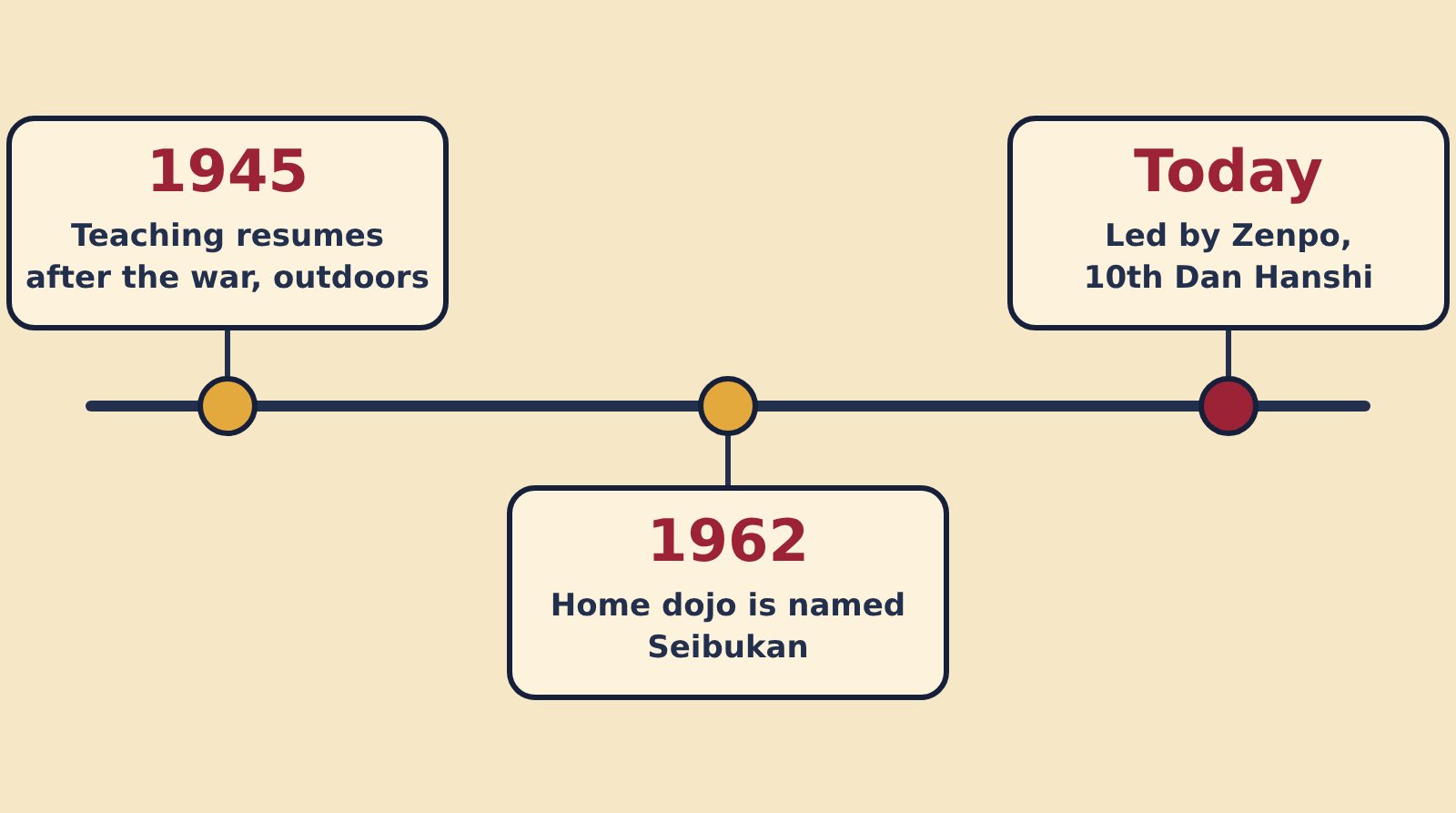
The dates at a glance, from the dojo’s site unless noted:
- 1870: Kyan Chotoku is born in Shuri.
- 1945: Zenryo resumes teaching after the war, outdoors.
- 1962: he builds a dojo at home and names it Seibukan.
- 1964: he is awarded 10th dan, according to the site and Wikipedia.
- 2001: Seibukan takes root in Auckland.
A student of Kyan
The dojo’s site describes Zenryo as “a direct student” of Kyan Chotoku, the Shuri-born master at the start of the Seibukan line. If you would like that first chapter, we wrote about Chōtoku Kyan and why Seibukan traces its line to him.
1945: teaching resumes, outdoors
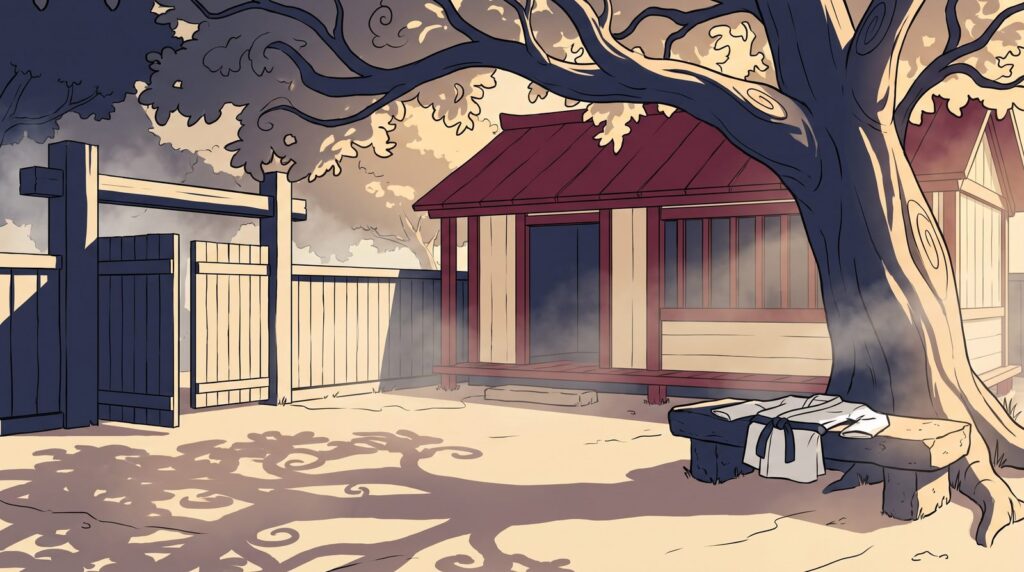
The site’s timeline moves to 1945. It says Zenryo “resumes teaching after the war, training outdoors”. That one line carries a lot. Wikipedia’s Shuri entry notes that Shuri Castle was destroyed in the Battle of Okinawa that year. The dojo’s own wording, “after the war, training outdoors”, tells us the rest we need to know: this was a restart in difficult conditions.
The site does not tell us who his students were in those years, how many there were, or what the ground looked like. We will not invent any of that. What we can say is that the line the dojo describes did not stop in 1945. It was picked up, in the open air, and carried on.
1962: a dojo at home, and a name
The site says that in 1962 Zenryo “builds a dojo at home and names it Seibukan”, a name it translates as “Holy Art School”. It also describes Seibukan as the Sukunaihayashi style of Shorin-ryu, founded in 1962. In plain terms: a style that already had a lineage was given an organised home and a name, in a dojo that was part of a family house.
Public sources fill in a little more of the picture. Wikipedia’s entry on Zenryo Shimabukuro says he opened his own dojo after the war, teaching karate out of his home, and that in 1962 he founded his school and named it Seibukan, “meaning Holy Art School”. It also says he was awarded 10th dan in 1964 and that his son Zenpo became master of Seibukan after his death. That entry carries a note that it relies heavily on primary sources, and it gives conflicting references for his birth year, so we have not repeated a birth year here.
Seventeen years
Put the two dates side by side: 1945 and 1962. That is seventeen years between teaching in the open air and naming a dojo at home. It is a useful reminder that Seibukan was not built overnight. It was built by someone who kept teaching when conditions were hard, and who gave what he taught a name once it had a place to live. That reading is ours, not the dojo’s, but it follows from the dates the dojo gives.
A name, and a question
The site calls Seibukan “the Sukunaihayashi style of Shorin-ryu”. We have not found a reliable source that explains the Sukunaihayashi part in plain English, so we will not guess. It is a good question for your instructors, and we would rather print their answer in a future post than our guess in this one.
From one dojo to a world association
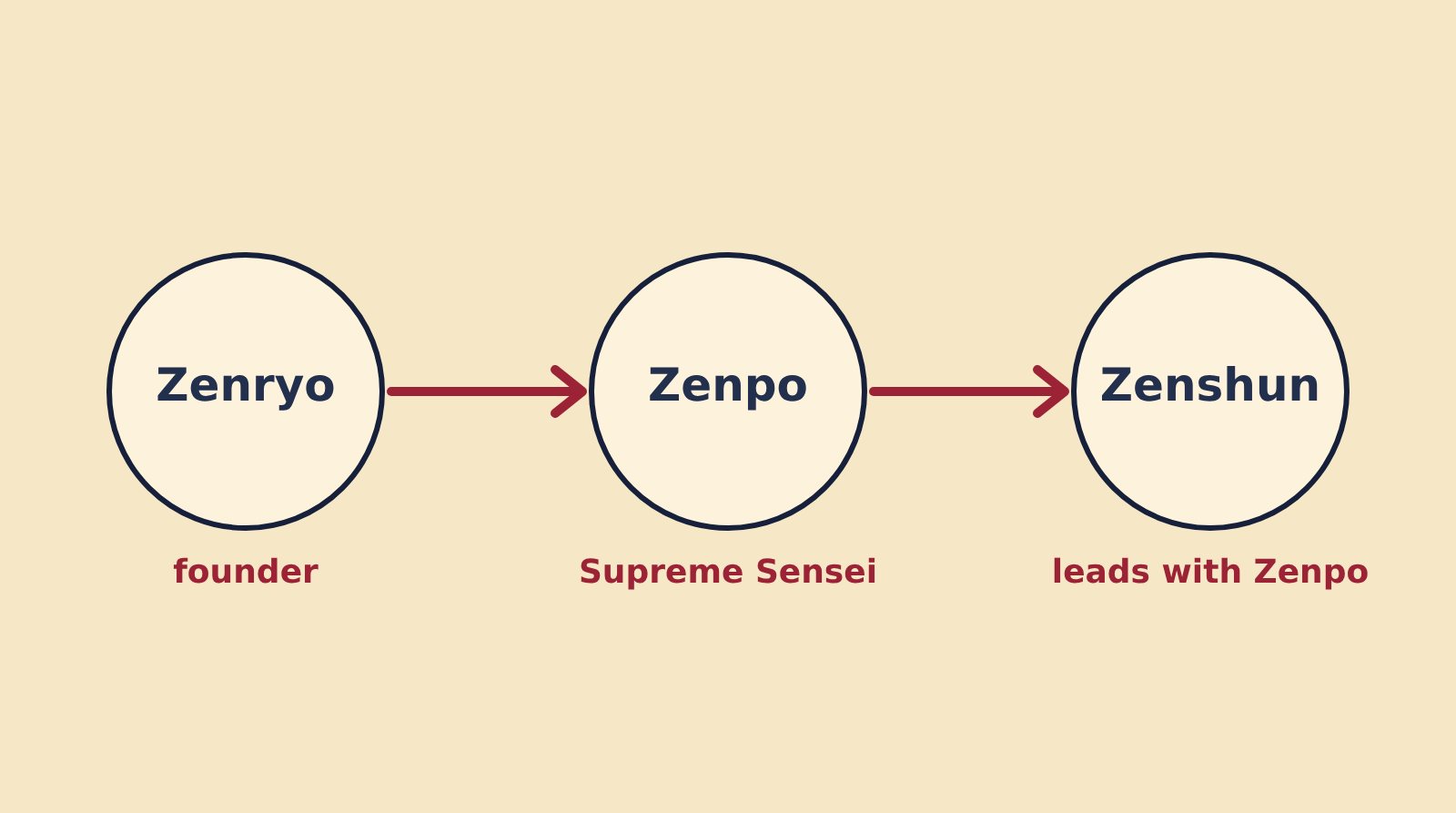
What began in a family home has grown a long way. The dojo’s site says the association today is led by Shimabukuro Zenpo, 10th Dan Hanshi and Supreme Sensei, together with his son Zenshun, and that chartered dojos are listed in Japan, Europe, Russia, the USA, India, the Middle East and elsewhere. It also says Seibukan “first took root in Auckland in 2001”, when Sensei Sri Ramamurthy opened three dojos and taught about 250 students. We will come back to that in a later post on Seibukan today.
A passbook that travels
The dojo’s joining fee is a one-off $20 and it covers a passbook. The site says the passbook “lets you train at any IOSSKA dojo worldwide”. It is a small, practical sign of how far a family-home dojo from 1962 has grown: by the site’s account, a student in Ōrākei can train at any dojo in the association.
Questions to ask your instructors about the history
- Who taught you, and who taught them?
- What did training look like in the early years of the Auckland dojos?
- What does the name Seibukan mean to you?
- Which kata do you think shows the style best, and why?
- Which part of the history do you teach new students first?
What a beginner can take from it
You do not need this story to start training, and nobody will test you on dates. But it explains the tone of the place. The dojo says its karate is “taught the traditional way: kata, kihon and kumite, with respect at the centre of everything”. A style that was kept alive by teaching in the open air, and then given a home in a family house, is one where the people matter more than the building.
If you would like to meet some of those people, the first two classes are free. Call 029 128 0873 or fill in the form, and for the evening itself see what to expect at your first class.
Frequently asked questions
Who was Shimabukuro Zenryo?
According to the dojo’s site, Zenryo was a direct student of Kyan Chotoku who resumed teaching after the war in 1945, training outdoors, and in 1962 built a dojo at home and named it Seibukan.
What does Seibukan mean?
The dojo’s site translates Seibukan as Holy Art School. Wikipedia gives the same meaning.
When was Seibukan founded?
The dojo says Zenryo named his dojo Seibukan in 1962 and describes Seibukan as the Sukunaihayashi style of Shorin-ryu, founded in 1962.
Who leads Seibukan today?
The dojo’s site says Shimabukuro Zenpo, 10th Dan Hanshi and Supreme Sensei, leads the association together with his son Zenshun.
Does the Ōrākei dojo belong to the same association?
Yes. The dojo is IOSSKA-NZ, and the site says the first Seibukan dojos in Auckland were opened by Sensei Sri Ramamurthy in 2001.
Sources
- IOSSKA-NZ, seibukan.co.nz: lineage timeline, Auckland history and association leadership (checked October 2026).
- Zenryo Shimabukuro, Wikipedia: opening a dojo at home, 1962 founding, 10th dan in 1964. Flagged on Wikipedia as relying heavily on primary sources, so used only where it agrees with the dojo’s account.
- Shuri, Okinawa, Wikipedia: Shuri Castle destroyed in the 1945 Battle of Okinawa.
Curious about training? Your first two classes are free: Wednesdays and Fridays, 6 to 7pm, at Ōrākei Community Centre. Call now or fill in the form.