If you have trained for a while, the question comes eventually. The belts have changed colour, the kata have got longer, and somewhere in the back of your mind is a thought: what comes after the first black belt? And if you are new, a gentler version of it: where does all this lead?
The IOSSKA-NZ dojo at the Ōrākei Community Centre has a program for exactly that stage. It is called Black Belt & Advanced. This post sets out what the dojo says about it, adds plain context on what a black belt is, and is honest about what the site does not say. Dojo facts are from its own site, checked in October 2026.
What the program says
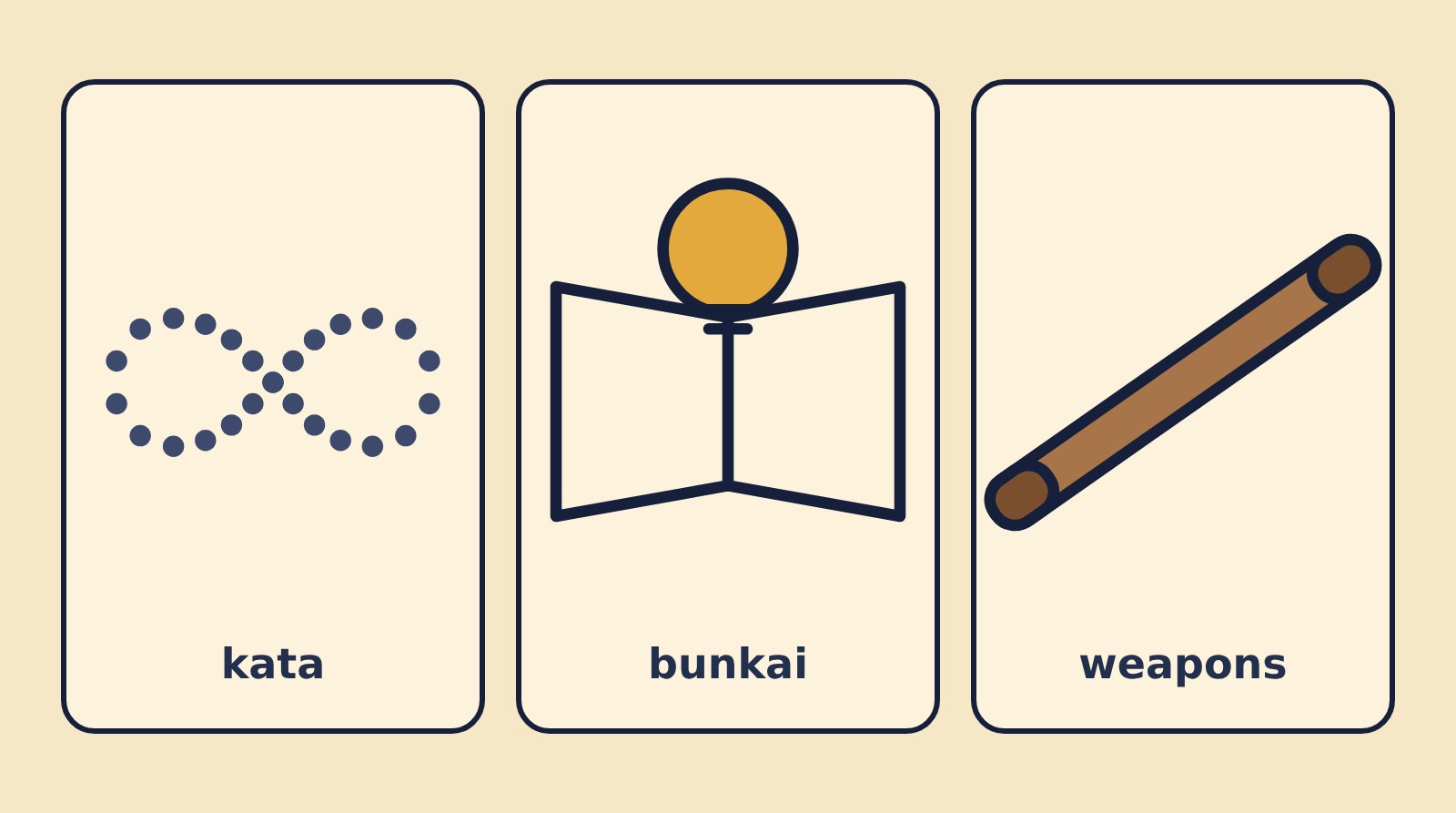
The dojo describes it in one line: “Deep study of Seibukan kata, bunkai and weapons for senior students.” That is all the site says about the program itself.
It does not say what makes a student “senior”, whether that means a grade, a number of years, or an instructor’s invitation. It does not give a price, a timetable, or entry requirements. And it does not say whether the program runs inside the Wednesday and Friday, 6 to 7pm classes or separately. We would rather say so than guess. Ask the instructors.
A black belt in plain words
According to Wikipedia’s Kyū entry, the grades below black belt are kyū grades, and they count down: “1st kyū is the highest”. The dan ranks begin after 1st kyū, and shodan, the first black belt degree, marks the move from kyū to dan. The entry puts the logic this way: the kyū is the number of steps before reaching mastery, whereas the dan gives steps into mastery.
It adds something worth pausing on. Practitioners at kyū level are often called mudansha, “ones without rank”, and are “considered as initiates rather than students”. Holders of any black belt degree are called yūdansha, “one with rank”. Our reading, not Wikipedia’s, is that a first black belt marks the start of a deeper kind of study, not the end of one. That fits the idea of a program for “senior students” and a phrase like “deep study”.
For how the dojo’s own gradings work, and what its site does and does not say about them, see how karate belt grading works at the Ōrākei dojo.
Three strands: kata, bunkai and weapons
Kata. The dojo lists these kata on its site: Fukyugata Ichi, Fukyugata Ni, Pinan 1 to 5, Naihanchi 1 to 3, Seisan, Ananku, Wansu, Passai, Gojushiho, Chinto, Kusanku, Wanchin, Jion, Passai Guwa and Tokumine no Kun. A kata is “a detailed choreographed pattern of martial arts movements”, according to Wikipedia, practised to memorise and perfect them. The site does not say which kata belong to which level, so we will not match them up.
Bunkai. Wikipedia says bunkai literally means “analysis” or “disassembly”, the process of analysing kata and extracting fighting techniques. For the longer explanation, see what bunkai is.
Weapons. This is the strand we know least about. The program line says “weapons”, and the site’s only mention of kobudo is in the biography of Sensei Prinkal Nizama, who holds a kobudo black belt. The site does not say which weapons are taught, how the training is structured, or which of the listed kata involve them. We have not found a reliable public source that would let us say more without guessing, so we will not.
The people, and how far the dan ladder goes
The instructors’ ranks give a sense of the road. The site lists Sensei Sri Ramamurthy as an instructor (Ni Dan), who trained in India from 1985 under Sensei P R Ratnapala and moved to New Zealand in 2001. Sensei Prinkal Nizama is Chief Instructor and Technical Director (Godan), a Seibukan black belt with 31 years of karate who has taught more than 250 students in India, about 100 of them to black belt. Kyoshi Ratnapala is the dojo’s advisor (7th Dan) and Chief Instructor of Seibukan in India; he has trained since 1972 and has studied directly under Hanshi Zenpo Shimabukuro in Okinawa since 1993. Zenpo Shimabukuro is the Supreme Sensei, 10th Dan Hanshi.
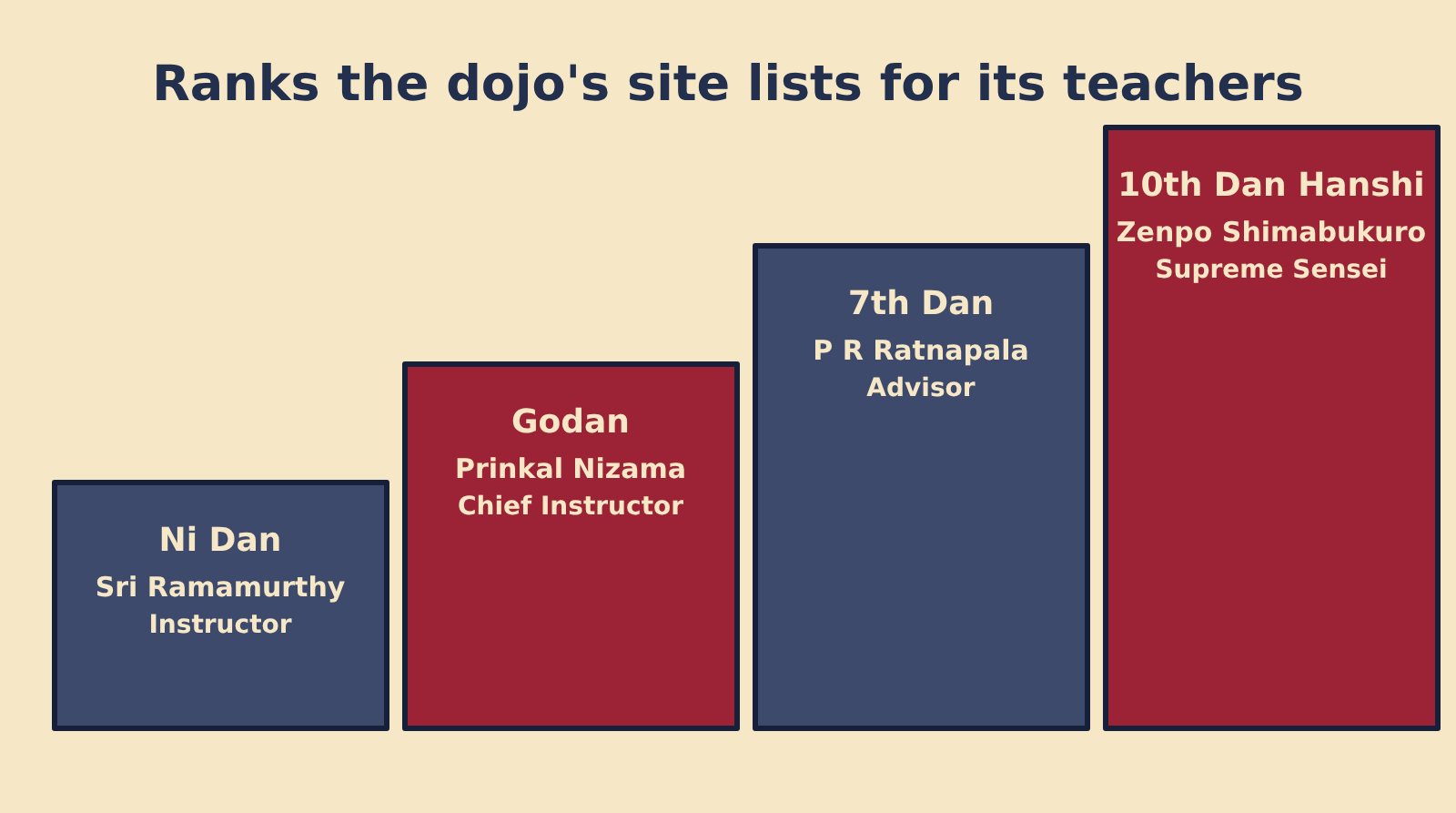
Those are the ranks the site gives, not a pass-rate or a timetable. We will not read a time-to-black-belt out of them, because the site gives no timeframe. For the wider story of the association, see Seibukan today.
Time, gradings and training twice a week
What the site does say is practical. Grading “is held approximately every 6 months”, and “Cost of grading separate”. It also says “Best results: train twice a week”, and that training one day a week “gives slower progress”. It does not publish what a grading requires, how many gradings lie between a beginner and a black belt, or how long that takes, so those are good questions for the intro call.
What it costs
The Black Belt & Advanced program has no published price. Do not assume it matches the age-based programs. For reference, here are the age-based prices from the site, in NZD, per person, per month:
| What | Cost |
|---|---|
| Teens & Adults, 2 days a week (recommended) / 1 day a week | $95 / $65 |
| Juniors and Seniors, 2 days a week (recommended) / 1 day a week | $85 / $55 |
| Joining fee | $20, one-off, covers your passbook |
| Gi, badge and belt | Not included |
| Grading | Charged separately, about every 6 months |
| Family discount | 50% off the monthly fee for every additional family member, on either plan |
Questions to ask the instructors
These are our suggestions, not the dojo’s wording:
- What does “senior student” mean in practice: a grade, years of training, or an invitation?
- Is the program separate from the Wednesday and Friday classes, and when does it run?
- What does it cost, and how does the family discount apply?
- Which weapons are taught, and how does that training fit with kata and bunkai?
- What would a student need to have done before joining?
- Can a student who is not yet at that level watch a session to see what lies ahead?
If you are new, start where you are
Nobody joins the dojo at the advanced end. The first two classes are free, in whichever program matches your age: Juniors (7 to 14), Teens & Adults (15 to 64) or Seniors (65 and over). For one of them in detail, see karate for teens and adults at the Ōrākei dojo, or for what the first evening involves, what to expect at your first class. The dojo’s Teens & Adults program promises “a clear path to black belt”, and this advanced program is, by its own description, where that path leads.
How to try it
- Book. Call 029 128 0873 or fill in the booking form. An instructor will call within one working day. Ask about the advanced program on that call.
- Wear comfortable clothes you can move in. You do not need a uniform yet.
- Arrive 10 minutes early, on a Wednesday or Friday, 6 to 7pm. The current term runs from 7 October to 18 December, and bookings for next year will be announced shortly.
Frequently asked questions
What is the Black Belt & Advanced program?
The dojo describes it as deep study of Seibukan kata, bunkai and weapons for senior students. The site gives no price, timetable or entry requirements, so ask an instructor.
Can a beginner join the advanced program?
The dojo describes it as being for senior students, so it is not a starting point. Beginners start in the program for their age, and the first two classes are free.
Which weapons does the dojo teach?
The site’s program line says weapons but does not say which. Sensei Prinkal Nizama’s biography mentions a kobudo black belt. Ask the instructors what is taught.
What does shodan mean?
Shodan is the first black belt degree. It marks the transition from kyū grades, which count down to 1st kyū, to dan ranks, according to Wikipedia.
How long does it take to get a black belt?
The dojo does not publish a timeframe. It says grading is held approximately every 6 months, recommends training twice a week for the best results, and promises a clear path to black belt in its Teens & Adults program.
How much does the advanced program cost?
No price is published for this program. The age-based programs are $95 (Teens & Adults) or $85 (Juniors and Seniors) a month for two days a week, or $65 and $55 for one day, plus a one-off $20 joining fee. Prices are in NZD.
Sources
- IOSSKA-NZ, seibukan.co.nz: program wording, instructor biographies, grading wording, pricing and booking (checked October 2026).
- Kyū, Wikipedia: kyū, dan, shodan, mudansha and yūdansha.
- Kata, Wikipedia and Bunkai, Wikipedia: what kata and bunkai are.
Ready to start where you are? Your first two classes are free: Wednesdays and Fridays, 6 to 7pm, at Ōrākei Community Centre. Call now or fill in the form.