Watch a student practise a kata for the first time and you might think they are dancing. A set sequence, stepping and turning, hands moving in patterns, nobody in front of them. It is easy to see why beginners wonder what it is for. The answer is in a word you will hear in any serious dojo sooner or later: bunkai.
This post explains kata and bunkai in plain words, using public references for the meanings and the dojo’s own site for what it teaches. It also says plainly what we do not know: how the Ōrākei dojo teaches bunkai class by class. Dojo facts are from seibukan.co.nz, checked in October 2026.
Kata: the form
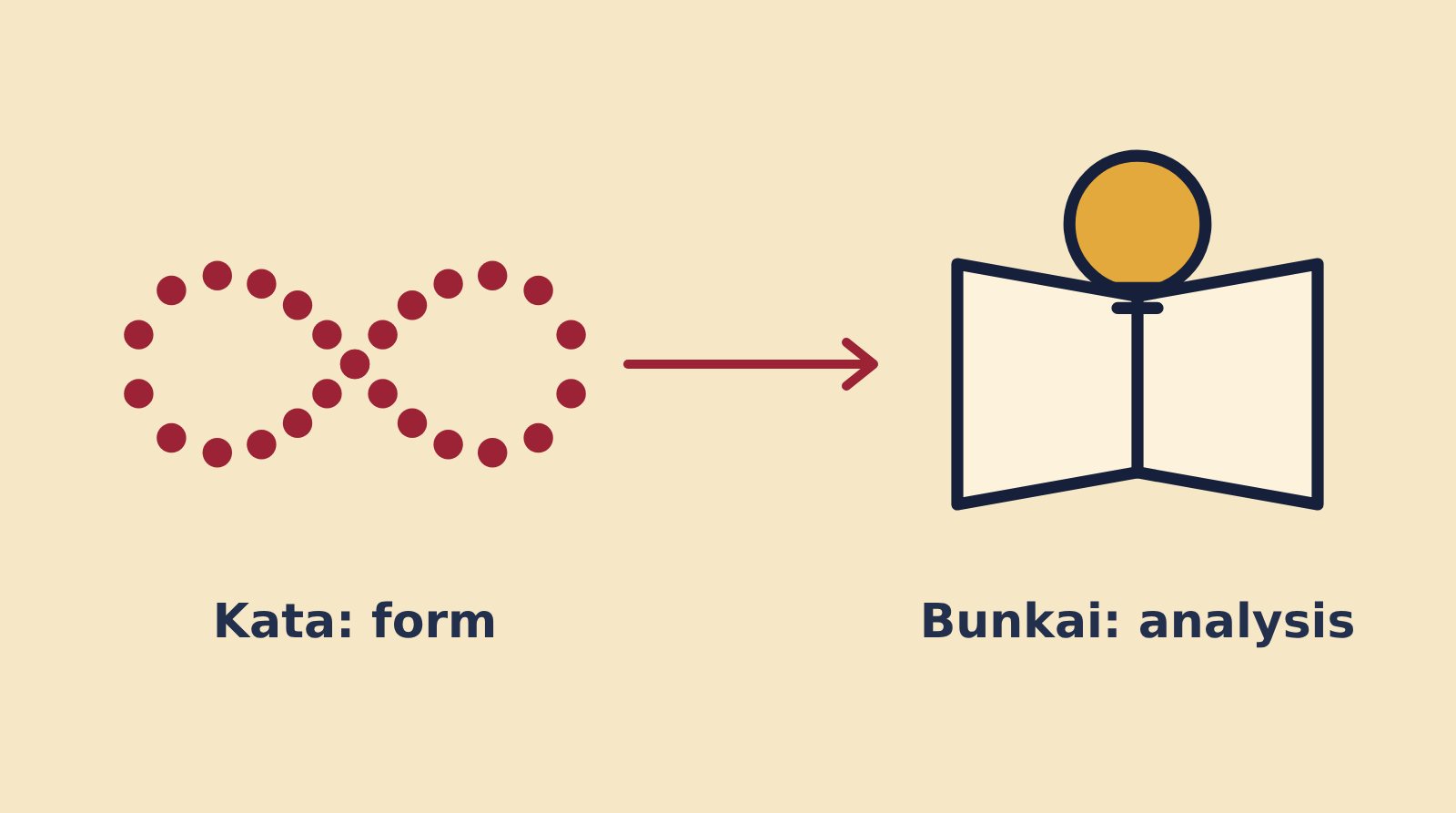
According to Wikipedia’s Kata entry, kata is a Japanese word meaning “form”, and it “refers to a detailed choreographed pattern of martial arts movements”. It is “practiced in Japanese martial arts as a way to memorize and perfect the movements being executed”, and it can also be reviewed within groups and in unison when training.
So a kata is a form: a fixed pattern that a student practises again and again. Memorising it is the first step. The second step, and the reason a kata exists, is understanding it.
Bunkai: the analysis
Wikipedia’s Bunkai entry says bunkai literally means “analysis” or “disassembly”, and describes it as the “process of analysing kata and extracting fighting techniques”. The techniques that come out of that process are called oyo.
In other words, bunkai asks of each movement in a kata: what is this for? A block, a strike, a turn, a step: each one, it says, can be studied to understand what it is meant to do.
How bunkai is practised
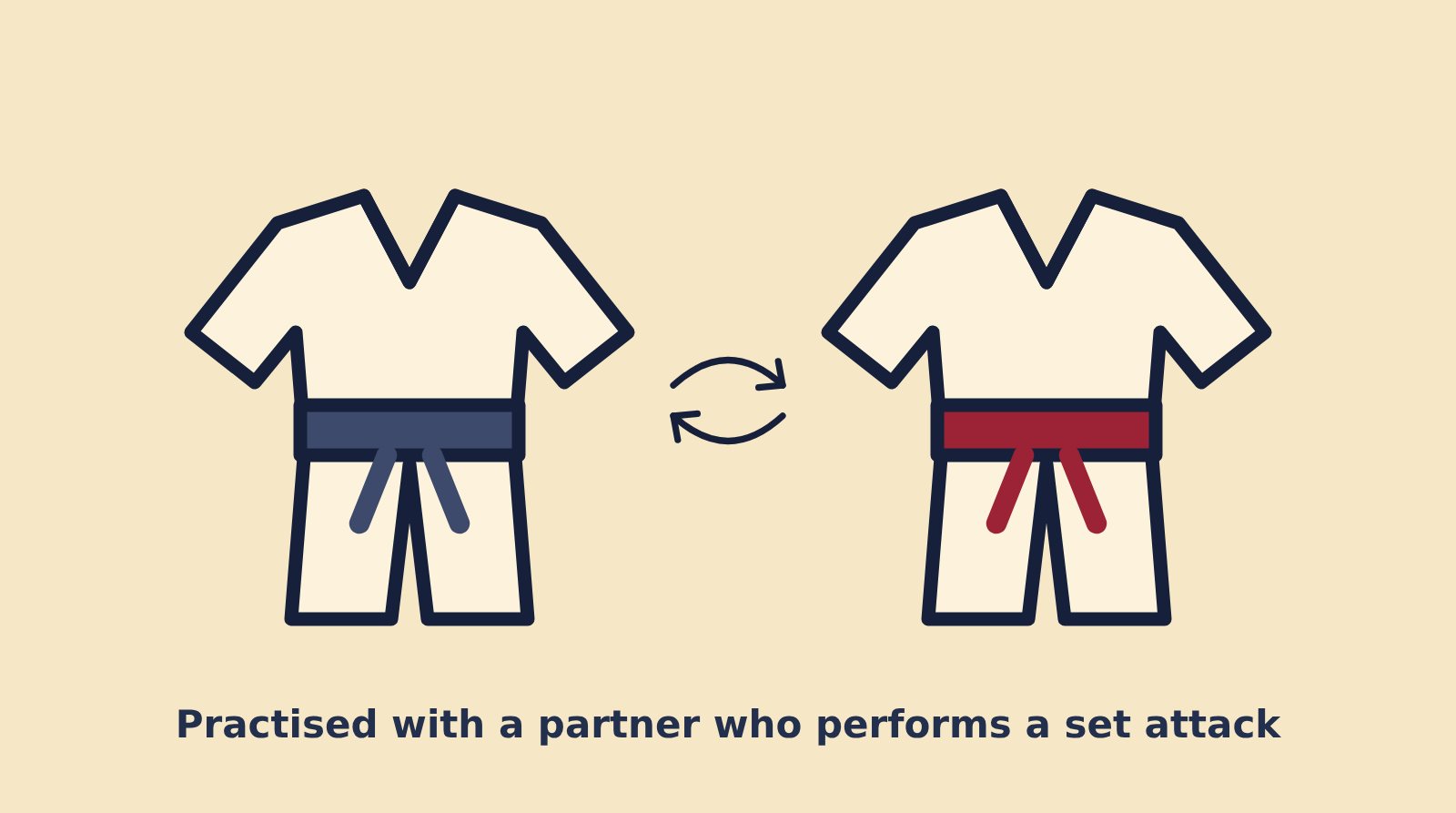
The same entry describes the usual method. Bunkai “is usually performed with a partner or a group of partners which execute predefined attacks”, and “this allows the student in the middle to understand what the movements in kata are meant to accomplish”. It says the practice helps refine distance, timing, rhythm and flow.
That is a general description from a public reference, not a description of any one dojo’s class. We have not found a source that sets out how the Ōrākei dojo runs it. What the dojo’s own site does say is that the Black Belt & Advanced program is “deep study of Seibukan kata, bunkai and weapons for senior students”. So bunkai is part of the program, and, going by that wording, it is something senior students study deeply. How and when beginners meet it is a question for the instructors.
Five words you will hear
- Kihon: “basics” or “fundamentals”, according to Wikipedia.
- Kata: “form”: a detailed pattern of movements, practised to memorise and perfect them.
- Kumite: literally “grappling hands”, and “one of the three main sections of karate training, along with kata and kihon”, says Wikipedia’s Kumite entry. In plain words, training with a partner.
- Bunkai: “analysis” or “disassembly”: studying a kata to understand its movements.
- Oyo: the fighting techniques extracted through bunkai, according to Wikipedia’s Bunkai entry.
The dojo puts the three main parts together in one sentence on its site: its karate is “taught the traditional way: kata, kihon and kumite, with respect at the centre of everything”. Bunkai is how the second of those three, kata, becomes something you understand and not only something you remember.
Why it matters for a beginner
You do not need to understand bunkai to start. Early on, the job is simpler: learn the basics, which Wikipedia’s Kihon entry defines as “basics” or “fundamentals”, and learn the first kata well. But knowing that there is an answer to “what is this movement for?” changes how you practise. A kata stops being a pattern to get through and becomes a puzzle to keep working on. That is our reading of the idea, and it is one reason people stay with karate for years.
The kata the dojo lists
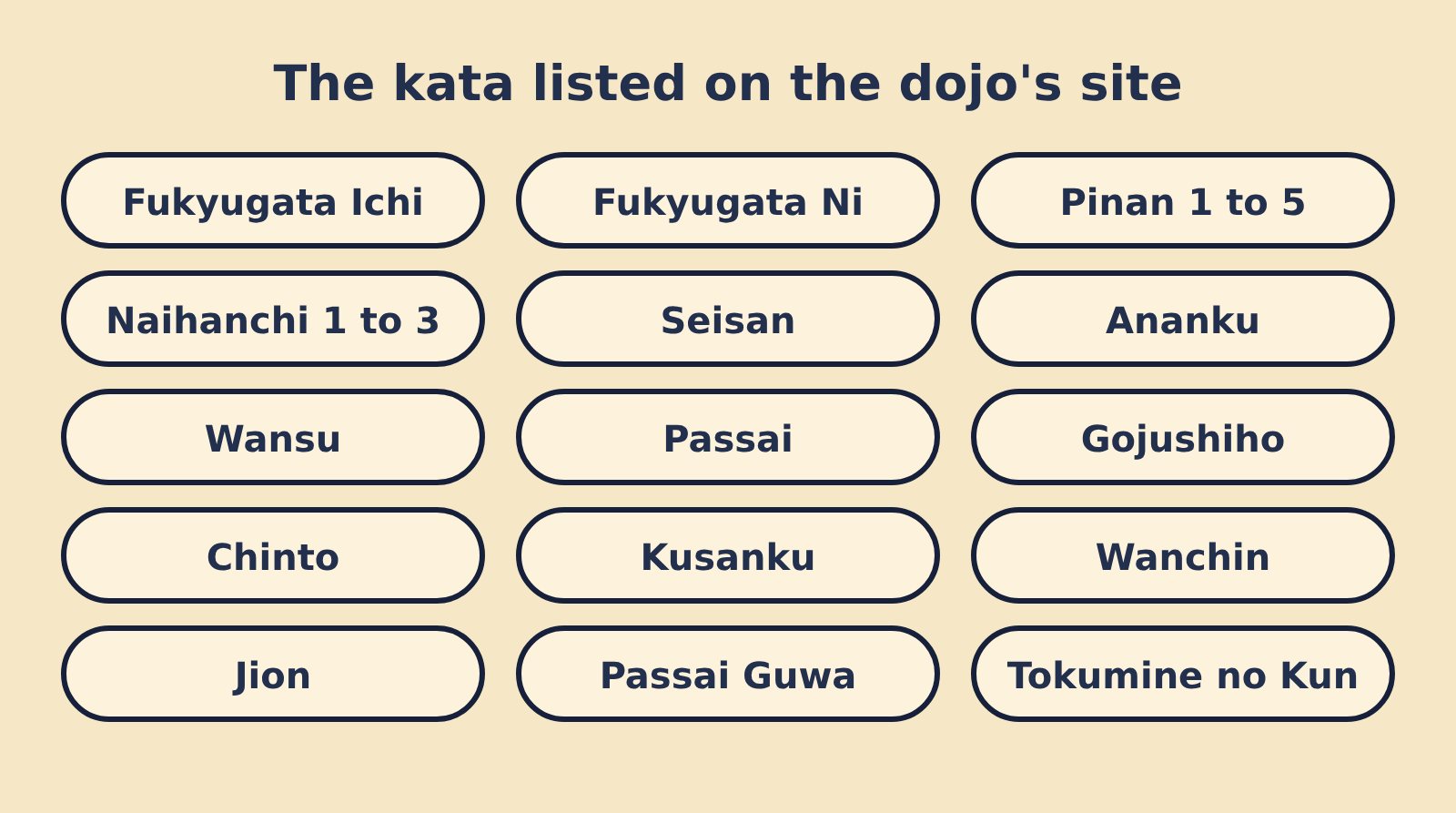
The dojo’s site lists these kata: Fukyugata Ichi, Fukyugata Ni, Pinan 1 to 5, Naihanchi 1 to 3, Seisan, Ananku, Wansu, Passai, Gojushiho, Chinto, Kusanku, Wanchin, Jion, Passai Guwa and Tokumine no Kun. The site does not say which are taught at which level, so we will not guess. One detail is worth noting: Ananku is the kata the dojo credits to Chōtoku Kyan, the start of its line (see Chōtoku Kyan and the start of the Seibukan line). The site lists the kata in a single run and does not say which are empty-hand and which involve weapons, although it does mention weapons training alongside kata and bunkai for senior students.
Questions to ask the instructors
These are our suggestions, not the dojo’s wording:
- At what point do students start to learn what the movements in a kata are for?
- Can I watch a class to see how kata and partner practice fit together?
- Which kata would you show a beginner first, and why?
- How is partner practice kept safe for beginners?
- How do you decide when a student is ready to study bunkai in more depth?
How to try it
The best way to understand kata and bunkai is to watch and then try. The first two classes at the dojo are free. Call 029 128 0873 or fill in the booking form, and an instructor will call you within one working day. Wear comfortable clothes you can move in, arrive 10 minutes early, and come on a Wednesday or Friday, 6 to 7pm. For what the evening involves, see what to expect at your first class.
Frequently asked questions
What does bunkai mean?
Bunkai literally means analysis or disassembly. It is the process of analysing a kata and extracting fighting techniques from its movements, according to Wikipedia.
What is the difference between kata and bunkai?
A kata is a form: a detailed pattern of movements practised to memorise and perfect them. Bunkai is the analysis of that form, to understand what its movements are meant to accomplish.
Does the Ōrākei dojo teach bunkai?
The dojo’s site says its Black Belt & Advanced program includes deep study of Seibukan kata, bunkai and weapons for senior students. It does not say how beginners meet bunkai, so ask the instructors.
Which kata does the dojo teach?
The dojo’s site lists Fukyugata Ichi and Ni, Pinan 1 to 5, Naihanchi 1 to 3, Seisan, Ananku, Wansu, Passai, Gojushiho, Chinto, Kusanku, Wanchin, Jion, Passai Guwa and Tokumine no Kun.
Do I need to know any of this to start?
No. The first two classes are free, you wear comfortable clothes you can move in, and the instructors show you what to do.
Sources
- IOSSKA-NZ, seibukan.co.nz: kata list, Black Belt & Advanced program wording and booking (checked October 2026).
- Bunkai, Wikipedia: the meaning of bunkai, oyo, and how bunkai is practised.
- Kata, Wikipedia: the meaning of kata and why it is practised.
- Kihon, Wikipedia: the meaning of kihon.
Curious about training? Your first two classes are free: Wednesdays and Fridays, 6 to 7pm, at Ōrākei Community Centre. Call now or fill in the form.