
Walk into a karate dojo for the first time and you will hear words you have never used. Someone says “sensei”. Someone asks you to practise your “kihon”. The booking page asks about your “karate experience”, and the program list mentions “kata”, “bunkai” and “kumite” as if everyone knows what they are. It is easy to nod along and hope for the best.
This post is a plain glossary of the Japanese and Okinawan words on the IOSSKA-NZ site, with where each one appears and what a neutral reference says it means. We have used Wikipedia for the meanings, because it is a general reference and not any school’s own account, and we have left out anything the sources would not let us say. Dojo facts are from its own site, checked in November 2026.
Dojo
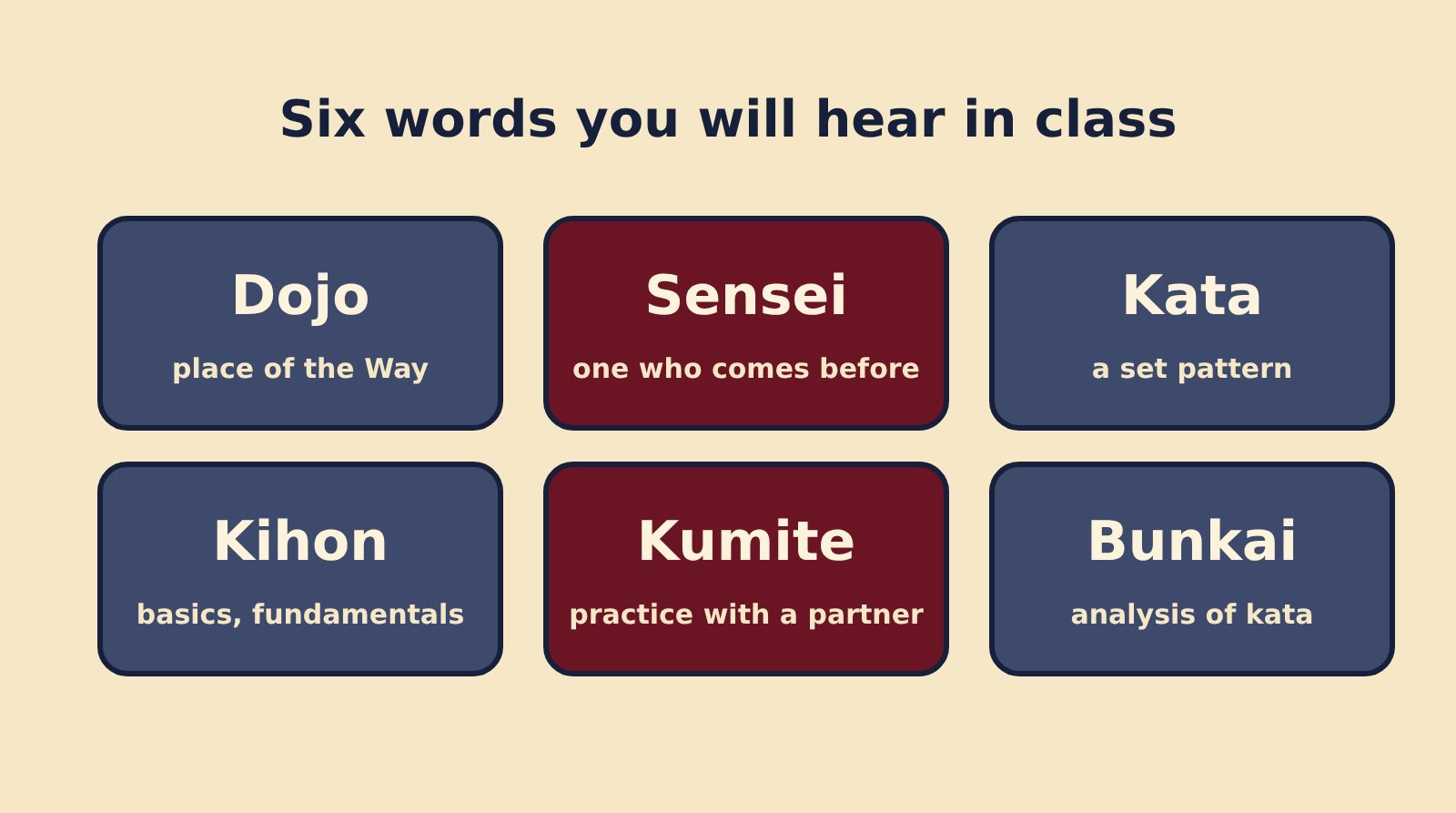
The word is in the dojo’s name and on every page. Wikipedia describes a dōjō as “a hall or place for immersive learning, experiential learning, or meditation”, and says the term literally means “place of the Way” in Japanese. The Ōrākei class meets in a community centre hall, not a purpose-built space, but the idea carries: the room is where you learn.
Sensei
The site names its teachers as Sensei Prinkal Nizama and Sensei Sri Ramamurthy. Wikipedia’s entry says that in Japanese the word “literally means ‘person born before another’ or ‘one who comes before'”, and that it is “generally used after a person’s name and means ‘teacher'”. So “Sensei Sri” is simply “teacher Sri”. You can use it to address an instructor in the same way.
Kata, kihon and kumite
These three words are how the dojo describes its Teens & Adults class: “Traditional kata, kihon and kumite.”
- Kata is “a detailed choreographed pattern of martial arts movements”, practised to memorise and perfect them. The dojo’s site lists 21 forms, which we grouped in the kata list as a map.
- Kihon is “basics” or “fundamentals”. Wikipedia says kihon techniques “tend to be practiced often, in many cases during each practice session”.
- Kumite is practice with a partner. The word is often translated as sparring. How soon a beginner meets partner practice is not on the site, so ask.
Bunkai
The Black Belt & Advanced program promises “deep study of Seibukan kata, bunkai and weapons”. Wikipedia says bunkai (分解) literally means “analysis” or “disassembly”, and refers to “the process of analysing kata and extracting fighting techniques from the movements” of a form. We explain it more fully in what bunkai is.
Kyū and dan
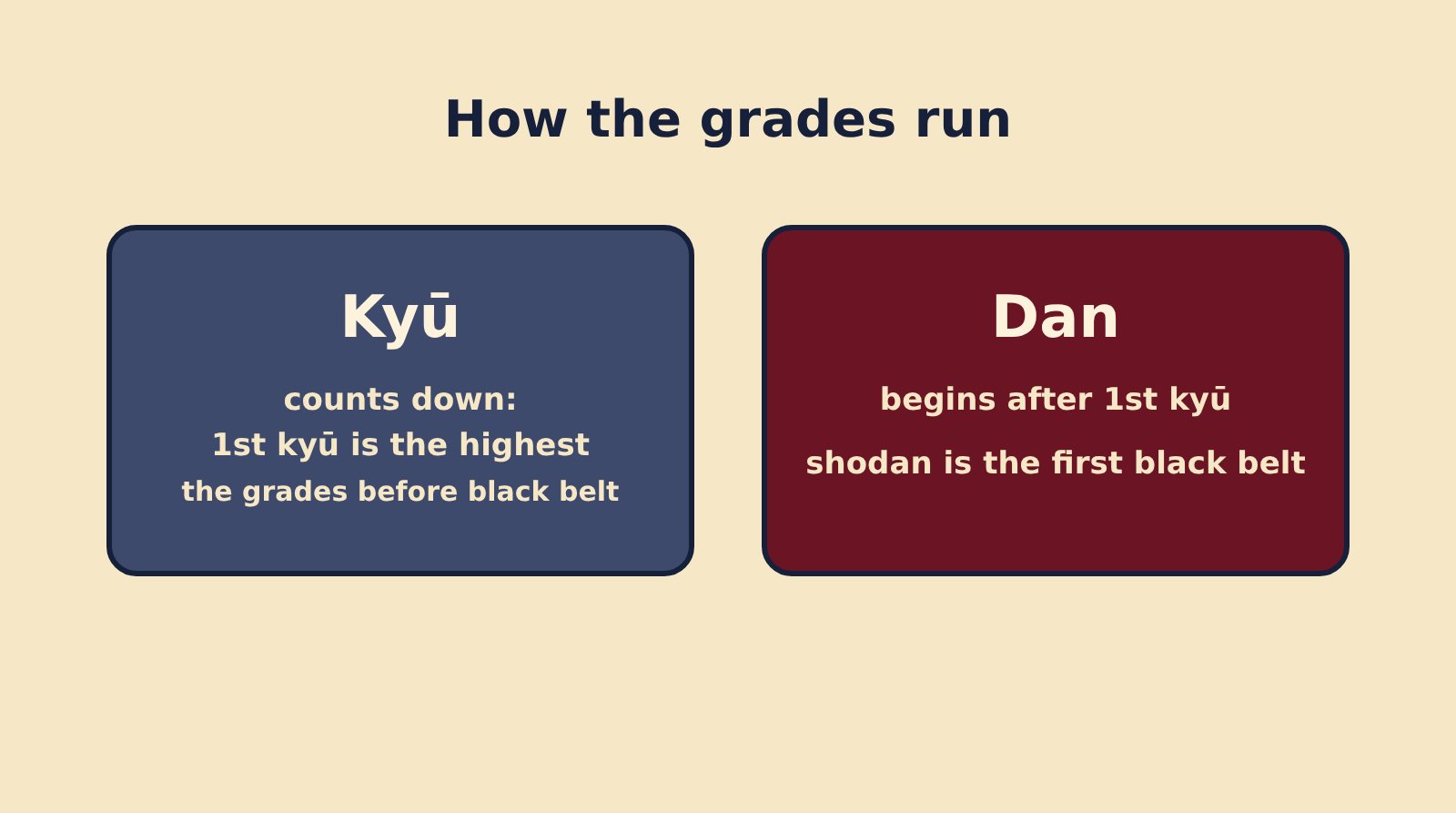
These are the grades. Wikipedia’s entry on kyū says “kyū ranks progress using a descending order system, so 1st kyū is the highest”, and that the dan ranks begin after 1st kyū. Shodan, the first black belt degree, marks the move from kyū to dan. Our post on how belt grading works covers what the dojo says about its gradings. The site lists Sensei Sri Ramamurthy as Ni Dan, which is second dan, and Sensei Prinkal Nizama as Godan, fifth dan.
Hanshi and kyoshi
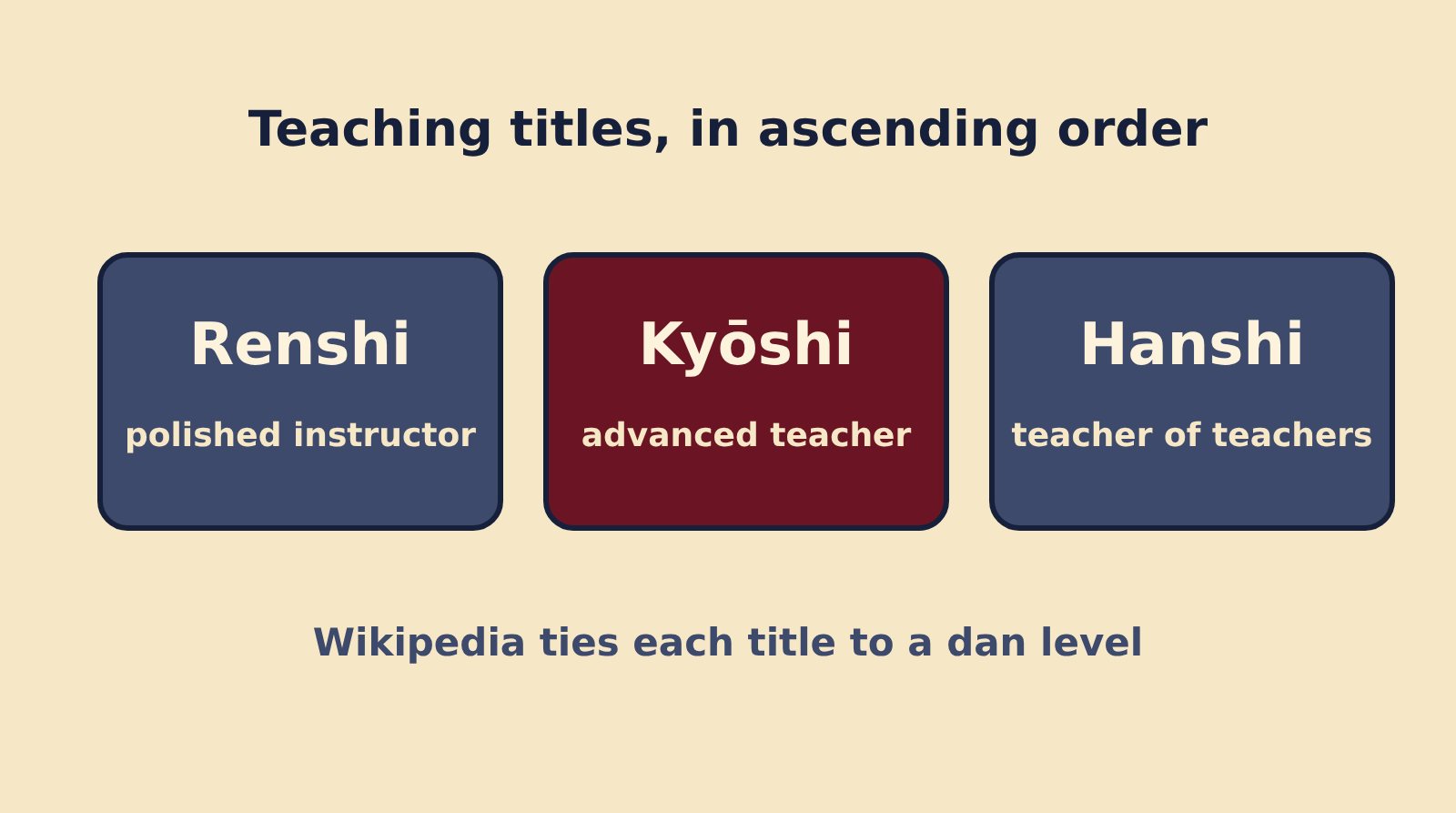
The site gives the Supreme Sensei, Shimabukuro Zenpo, as “10th Dan Hanshi”, and the advisor, P R Ratnapala, as “Kyoshi” and 7th Dan. These are teaching titles, called shōgō. Wikipedia’s entry on Japanese honorifics glosses renshi as “polished instructor”, kyōshi as “an advanced teacher” and hanshi as a “teacher of teachers”, and says hanshi is sometimes translated “Grand Master”. It ties each title to a dan level, 4th and above for renshi, 6th for kyōshi and 8th for hanshi, and other sources vary on the exact levels, so treat those numbers as a guide. The dojo’s own listings, 7th Dan Kyoshi and 10th Dan Hanshi, fit the pattern.
Bō and kun
The syllabus ends with Tokumine no Kun. Wikipedia says a bō (棒) is “a staff weapon used in Okinawa”, and gives its Okinawan name as kun. We follow it in the staff and Tokumine no Kun.
Seibukan and the other words on the site
The style’s name, the dojo’s site says, means “Holy Art School”. The site also speaks of a “hombu dojo” in Chatan, Okinawa, which is its headquarters dojo, and of a “passbook”, which is an English word: the $20 joining fee covers a passbook that the dojo says lets you train at any IOSSKA dojo worldwide. Confirmation of a booking begins “Osu!”, the dojo’s greeting. We have not tried to explain its origin, because the sources we found disagree.
Why the words matter
You can train for years without learning more than a handful of these. But the words carry the structure of the practice: the room you learn in, the teacher, the basics, the forms, the partner work, the meaning behind the movements, and the ladder you climb. Knowing which is which makes the program lines on the site, and the questions on the booking form, much easier to read.
If a word is missing
Dojo vocabulary grows as you train, and every dojo uses it a little differently. The site does not give a glossary of its own, and does not say how formally the Ōrākei class uses these words. If you hear one that is not here, ask. A good instructor will be glad of the question, and you can put it on the call when you book.
If you are new
You do not need to know any of these words to start. The first two classes are free, with no obligation, on Wednesdays and Fridays, 6 to 7pm, at Ōrākei Community Centre, 156 Kepa Road. Wear comfortable clothes you can move in, arrive 10 minutes early, and tell the instructors about any injury or health condition. The current term runs from 7 October to 18 December. Call 029 128 0873 or fill in the form.
Frequently asked questions
What does sensei mean?
Literally “person born before another” or “one who comes before”, and generally used after a name to mean “teacher”, according to Wikipedia.
What are kata, kihon and kumite?
Kata are set patterns of movement, kihon are the basics, and kumite is practice with a partner. The dojo describes its Teens & Adults class as “Traditional kata, kihon and kumite.”
What is bunkai?
The analysis of kata, extracting the techniques from the movements of a form. It literally means “analysis” or “disassembly”.
What is the difference between kyū and dan?
Kyū grades count down toward black belt, so 1st kyū is the highest. Dan grades begin after 1st kyū, and shodan is the first black belt degree.
What do hanshi and kyoshi mean?
They are teaching titles. Kyōshi is glossed as an advanced teacher and hanshi as a teacher of teachers. The dojo’s site lists its Supreme Sensei as 10th Dan Hanshi and its advisor as 7th Dan Kyoshi.
Sources
- IOSSKA-NZ, seibukan.co.nz: where each word appears, the instructors’ titles and ranks, the style’s name, the hombu dojo, the passbook and the booking confirmation (checked November 2026).
- Dōjō, Sensei, Kata, Kihon, Kumite, Bunkai, Kyū, Bō and Japanese honorifics, Wikipedia: term meanings only.
Curious? Your first two classes are free: Wednesdays and Fridays, 6 to 7pm, at Ōrākei Community Centre. Call now or fill in the form.