Your child is eight, or ten, or thirteen, and something is off. They are quieter after school, or they have stopped mentioning a friend, or they have started saying they would rather not go. You are not sure whether it is a phase or something more. And somewhere in the back of your mind is the thought: maybe they need something of their own, somewhere they can learn to stand up straight.
The Juniors program at the IOSSKA-NZ dojo is for children aged 7 to 14. This post covers what the dojo says it offers, what is and is not known about whether karate helps with bullying, what it costs, and what to ask before you book. Dojo facts are from its own site, checked in October 2026.
What the Juniors program is
The dojo describes it in one line: “Confidence, discipline and anti-bullying skills for school-aged children.” Juniors classes start at age 7, and there is a separate Teens & Adults program from age 15. The dojo teaches Seibukan, an Okinawan style of karate, and says respect and discipline are at the centre of it.
Classes are held at Ōrākei Community Centre, 156 Kepa Road, on Wednesdays and Fridays, 6 to 7pm. The current term runs from 7 October to 18 December, and bookings for next year will be announced shortly. That is a school-night slot, so think about dinner, homework and how your child copes with an evening out.
Who teaches
The dojo’s site names two local instructors. It lists Sensei Prinkal Nizama as Chief Instructor and Technical Director (Godan, fifth dan), and Sensei Sri Ramamurthy as Instructor (Ni Dan, second dan). It describes the first as having 31 years of karate experience and a kobudo (weapons) black belt, and the second as having trained since 1985 and moved to New Zealand in 2001. These are the dojo’s own statements and we have not verified them independently. The pages we read do not mention child-safety or first-aid qualifications, so that is a fair question to ask.
The dojo says every student is known by name and looked after. It also asks you to tell the instructors about any injury or health condition before class so they can train your child safely.
Does karate help with bullying?
This is the question most parents are really asking, and an honest answer has two halves.
The dojo’s claim is that its Juniors program builds “anti-bullying skills”. We have not found independent evidence that a karate class will stop a child being bullied, and we are not going to claim it. What a class can plausibly offer is a place to be with other children and adults who treat each other with respect, and the experience of learning something hard and getting better at it. Whether that changes things at school depends on the child.
The other half is that bullying is a school matter first. The Ministry of Education’s page on bullying: help and support for your child says to “talk to the school if you have concerns about bullying”, and to share what your child has told you. It suggests asking the school how it prevents and responds to bullying, and lists the next steps if you are unhappy: writing to the school board, contacting your regional Ministry office, and the Ombudsman. It points to Netsafe for online bullying, and to the police if the bullying involves physical or sexual assault, threats, a weapon or harassment.
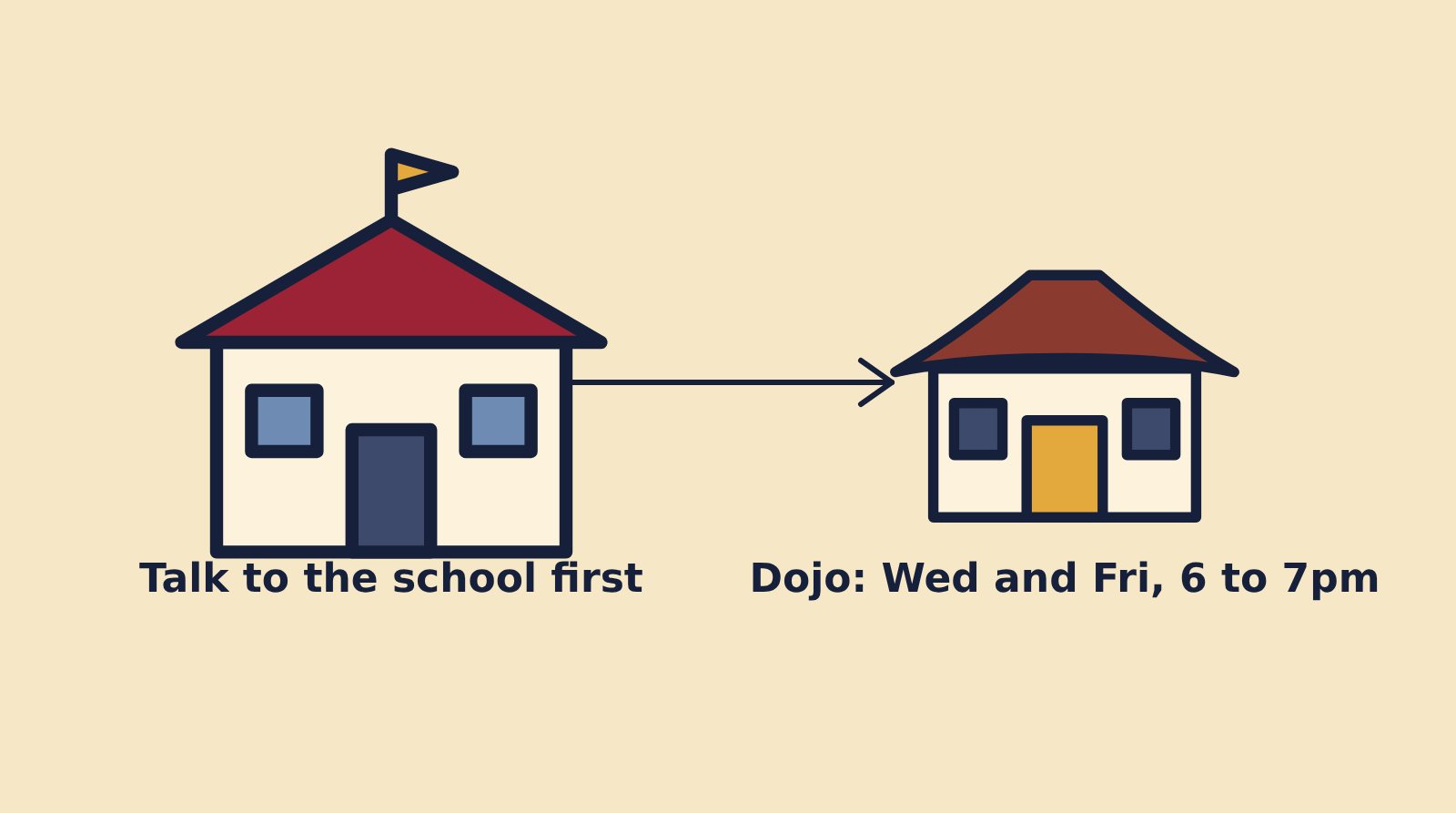
So talk to the school first, and consider karate as something that sits alongside that.
Is it safe for a child?
The dojo’s FAQ says respect and discipline are at the centre of its karate. That is a statement of values, not a safety record, and the site does not publish an injury policy or supervision ratios. Ask the instructors how a new child is introduced to partner practice, how many children are in a class, and whether a parent can watch. For what the first evening looks like, see what to expect at your first class.
What to wear and bring
The site says to wear comfortable clothes you can move in, with no uniform needed for trial classes, and to arrive 10 minutes early for a welcome and a walk through the basics. It does not say whether to bring a water bottle or whether training is barefoot, so ask when you book.
What it costs
All prices are from the dojo’s site, in NZD, per child, per month.
| What | Cost |
|---|---|
| First 2 classes | Free, with no obligation |
| Juniors (7 to 14), 2 days a week (Wednesday and Friday), recommended | $85 per month |
| Juniors, 1 day a week (Wednesday or Friday) | $55 per month |
| Joining fee | $20, one-off, covers your passbook |
| Family discount | 50% off the monthly fee for every additional family member, on either plan |
| Gi, badge and belt | Not included |
| Grading | Charged separately, held approximately every 6 months |
The dojo’s advice is two days a week for the best results, and students can switch between plans. If a parent also wants to train, the family discount applies, and our post on family classes explains how that works.
How to try it
- Book. Call 029 128 0873 or fill in the booking form. Mention your child’s age and any injury or health condition.
- Ask the questions above about safety, class size and whether you can watch.
- Arrive 10 minutes early on a Wednesday or Friday, 6 to 7pm. The first two classes are free, so your child can decide before you pay anything.
For the wider question of what karate does for children, and what evidence we could and could not find, read is karate good for kids. If you live in Remuera, see junior karate from Remuera.
Frequently asked questions
What age can my child start karate?
Juniors classes start at age 7 and the program runs to age 14. From 15 your teenager joins the Teens & Adults program.
Will karate stop my child being bullied?
The dojo says its Juniors program builds anti-bullying skills, but we have found no independent evidence that a class will stop bullying. If your child is being bullied, the Ministry of Education advises talking to the school first.
How much do Juniors classes cost?
The first two classes are free. After that it is $85 a month for two days a week (recommended) or $55 a month for one day a week, plus a one-off $20 joining fee. The gi, badge and belt are extra, and grading is charged separately. Additional family members get 50% off the monthly fee.
What should my child wear to the first class?
Comfortable clothes they can move in. No uniform is needed for the trial classes. Arrive 10 minutes early.
When are the classes?
Wednesdays and Fridays, 6 to 7pm, at Ōrākei Community Centre, 156 Kepa Road. The current term runs from 7 October to 18 December.
Sources
- IOSSKA-NZ, seibukan.co.nz: Juniors program, class times, venue, instructors, pricing, safety wording and booking (checked October 2026).
- Bullying: help and support for your child, Ministry of Education: talking to the school, escalation, Netsafe and police.
Ready to try it? Your child’s first two classes are free: Wednesdays and Fridays, 6 to 7pm, at Ōrākei Community Centre. Call now or fill in the form.