
Before you walk into a new dojo, it helps to hear from someone who already has. The IOSSKA-NZ site shows three Google reviews from its business profile, all five stars. This post reads them closely: what each person actually says, what the three have in common, and what three reviews can and cannot tell you. It is written for families and students deciding whether to book the free classes.
Everything here comes from the IOSSKA-NZ site, checked in November 2026. The site says the reviews are lightly edited for spelling and grammar in places, and that one is an excerpt. We quote them as published there. We have not checked them against the Google profile itself, and the site does not show their dates.
The first review: a parent, about a six-year-old
Vijay Kosna writes about his son Gana. The review says Gana “began learning karate with Sensei Sri when he was just six years old, and it has been one of the best decisions we’ve made for him”. It says karate “has greatly improved his focus, strength and self-control, and those qualities now show up well beyond the dojo”. It adds that Gana enjoys it so much that “he practises his katas whenever he gets the chance”, and ends by praising “Sri’s patient, disciplined teaching”.
Two things stand out. First, the instructor named is Sensei Sri Ramamurthy, who, according to the site, moved to New Zealand in 2001 and opened three Auckland dojos. So this review looks back at his earlier teaching here, not at the current Ōrākei classes, and the site does not say when it was written. Second, Gana was six. The Ōrākei Juniors program starts at seven, so the age in the review is a little younger than today’s entry point.
The second review: an adult who trained in India
Aarti Pandya’s review is an excerpt. She says she learned karate in India “under the guidance of Sensei Rajubhai Nizama and Sensei Prinkal Nizama”. She credits their “dedication, hard work, discipline, patience, and genuine involvement in developing every student”, and says they teach “discipline, focus, perfection, confidence, self-control, perseverance, and values that become a part of one’s life”. She calls their patience and personal involvement with “students of different ages” “truly remarkable”.
This one is about Sensei Prinkal Nizama, who the site says is the Chief Instructor and Technical Director at Ōrākei, a Godan with 31 years of karate. It is evidence about how he teaches, from someone who trained with him, but in India rather than Auckland. The site’s own biography says he taught more than 250 students there. The review does not give numbers, ages or dates.
The third review: a short one about children
Badrish Mistry’s review is two sentences. “The teaching technique is so good that even a 7-year-old child can learn easily and happily. The children really enjoy it.” It adds that more people should join, “in my experience”. It does not name an instructor or a place.
What the three have in common
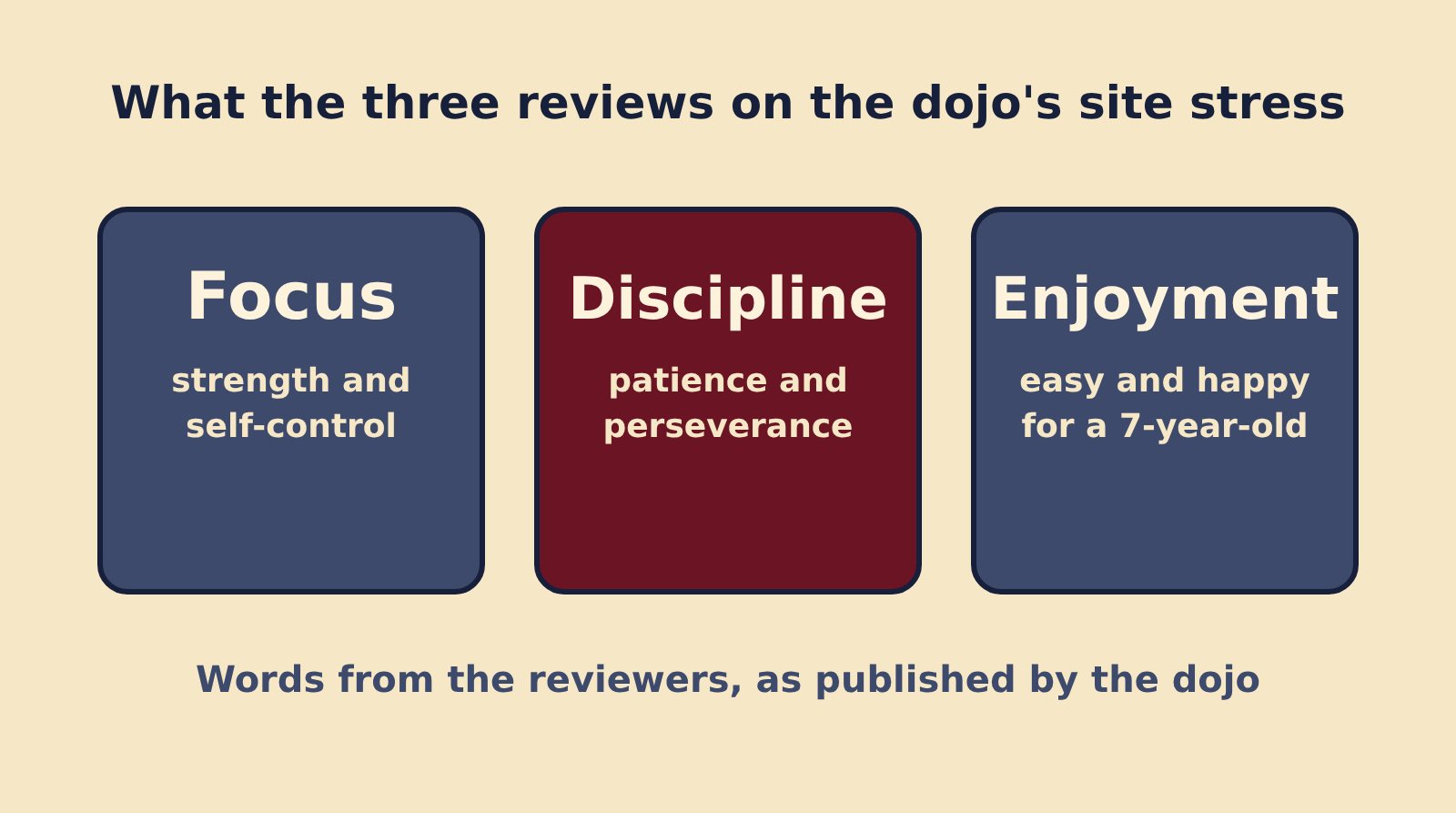
Read together, the reviews come back to a short list of words: focus, discipline, self-control, patience, perseverance, confidence and enjoyment. Two of the three mention children, and the third describes teaching “students of different ages”. Not one talks about winning anything or about fighting. That fits the dojo’s own line on its home page, “karate is not a sport”, and its description of a tradition taught “with respect at the centre of everything”. For more on that, see our post on what respect means in a Seibukan class.
That is our reading of the pattern, not the dojo’s. A reader could equally notice that the reviews say a lot about teachers and about how students feel, and little about the practical side, such as how classes are organised or what a typical evening looks like. For that, see what to expect at your first class.

What three reviews can and cannot tell you
A fair reading has limits, and it is better to say them plainly:
- They are a small sample. Three is not many. The site does not say how many reviews the profile holds in total, or how these three were chosen. The site says all of them are five-star, and it presents them as “What people say”.
- They are opinions, not measurements. A parent who says karate “greatly improved his focus” is describing what they saw. We cannot check it, and we are not claiming that karate improves focus for every child.
- They are not all about Ōrākei. One looks back at Sensei Ramamurthy’s earlier Auckland teaching and another at classes in India. That is relevant, since the same people lead the dojo now, but it is not the same as a review of this term.
- They are undated. We cannot tell how recent any of them is.
None of this makes the reviews false. It means they are a good reason to get in touch, not a promise about your own experience.
How to check for yourself
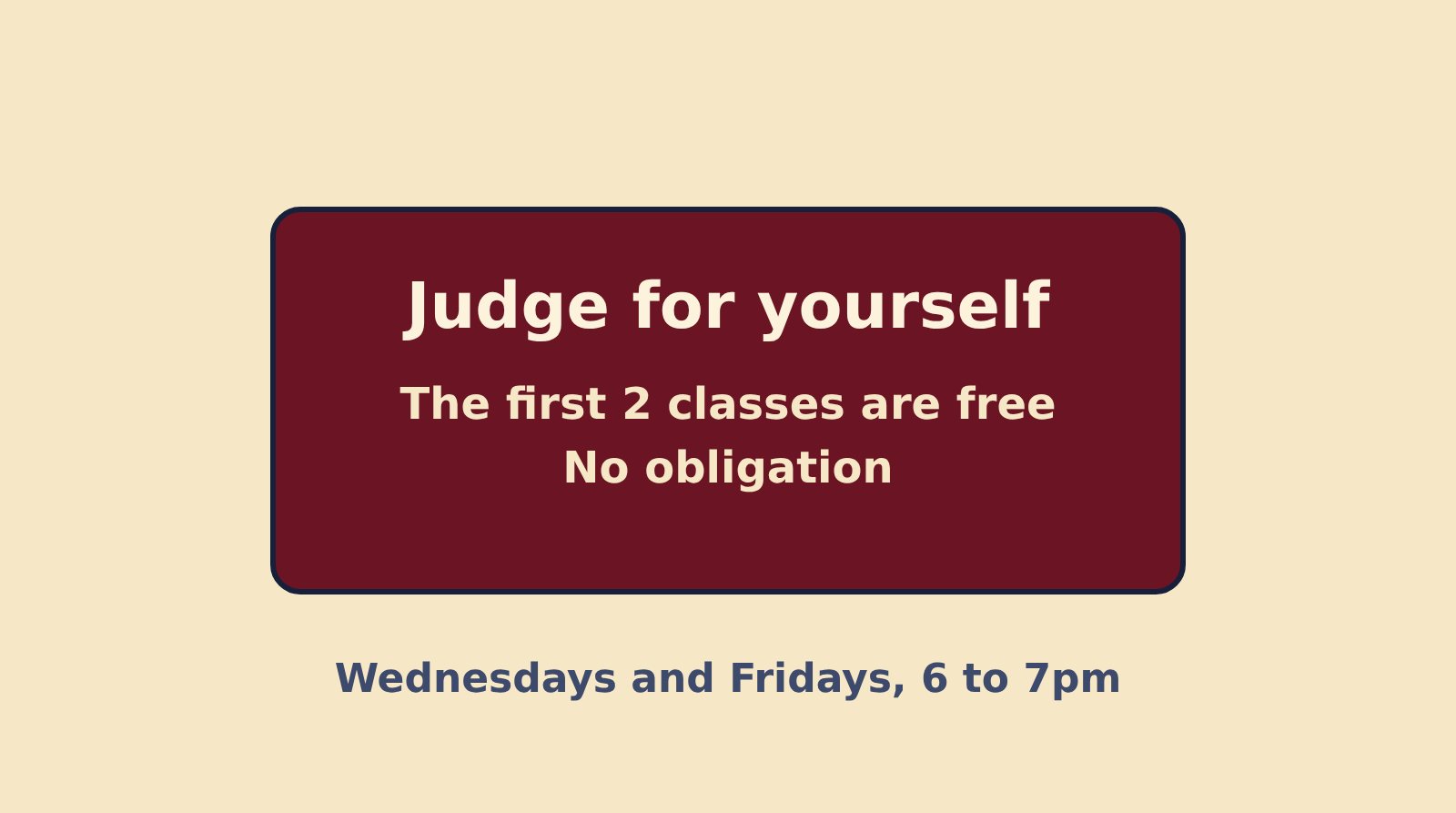
The dojo offers the best test on its own site: the first two classes are free, with no obligation. That is two evenings in which to see whether the teaching is “patient” and “disciplined”, as the reviewers say, whether the children look as if they are enjoying themselves, and whether you or your child feel comfortable. These are our suggestions for what to watch for, not the dojo’s wording:
- Does the instructor take time with beginners?
- Is the class calm and organised, and do students seem to know what is expected?
- Do children look engaged rather than anxious?
- Can you ask the instructor questions before or after class?
Questions to ask the instructors
These are our suggestions, not the dojo’s wording:
- Where can I read more reviews, and how many are there?
- Can I speak to a current parent or student before I decide?
- How do you help a nervous child settle in?
How to try it
- Book. Call 029 128 0873 or fill in the booking form. An instructor will call within one working day.
- Wear comfortable clothes you can move in. You do not need a uniform for trial classes.
- Arrive 10 minutes early on a Wednesday or Friday, 6 to 7pm, at Ōrākei Community Centre, 156 Kepa Road. The current term runs from 7 October to 18 December, and bookings for next year will be announced shortly.
Frequently asked questions
Where do the reviews on the dojo’s site come from?
The site says they are from the IOSSKA-NZ Google Business Profile, and that they are lightly edited for spelling and grammar in places. One is an excerpt.
How many reviews are there?
The site shows three. It does not say how many the profile holds in total.
Are the reviews about the Ōrākei classes?
Not all of them. One looks back at Sensei Sri Ramamurthy’s earlier teaching in Auckland, one at training in India under Sensei Prinkal Nizama, and one does not say where. The site does not give dates.
What do the reviewers say they value?
Between them they name focus, strength, self-control, discipline, patience, perseverance, confidence and enjoyment, and they mention teaching children and students of different ages.
How can I judge the dojo for myself?
The first two classes are free, with no obligation. Wednesdays and Fridays, 6 to 7pm, at Ōrākei Community Centre.
Sources
- IOSSKA-NZ, seibukan.co.nz: the three Google reviews as published, the note on editing, instructor biographies, the free trial, class times and venue (checked November 2026).
Ready to try it? Your first two classes are free: Wednesdays and Fridays, 6 to 7pm, at Ōrākei Community Centre. Call now or fill in the form.