Most of us do not read a club’s rules before the first visit. At the Ōrākei dojo, the rules are short and worth a minute, because they tell you what to do before class, how to behave in the dojo, and what happens if something goes wrong. They sit in the “Health, safety and injury” and “Dojo etiquette and conduct” sections of the dojo’s Terms and Conditions. This post turns them into a plain checklist, says what each line means in practice, and flags what the terms do not cover.
Everything quoted is from the terms page (last updated 29 September 2026, checked in November 2026). It is a summary, not legal advice. Our earlier post on the terms and privacy policy covers fees, consent and photos; this one is about the rules for training.
Before you leave home
The terms list what the dojo asks of every student “to keep everyone safe”:
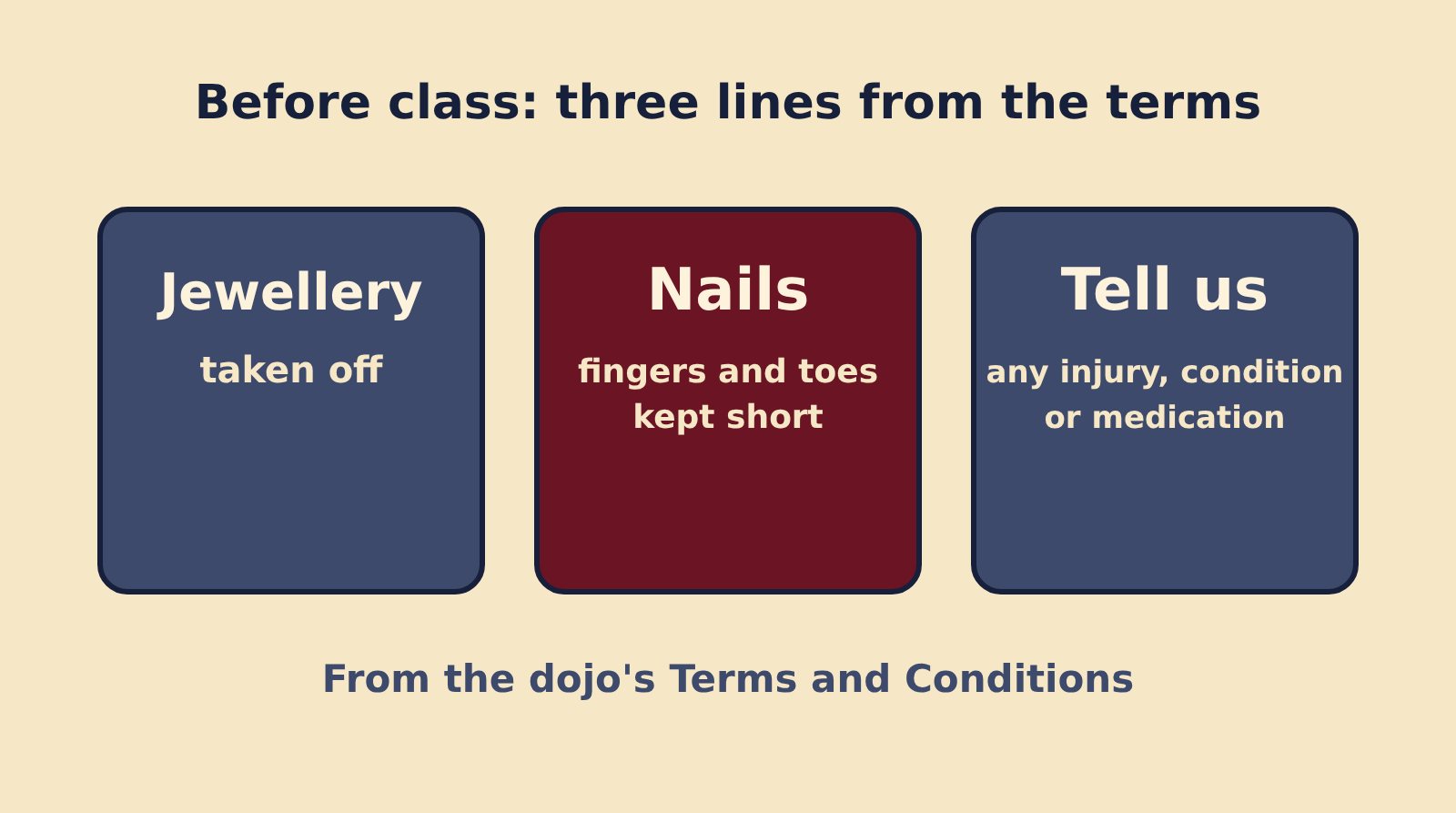
- “Tell your instructor about any medical condition, injury or medication that may affect training.”
- “Remove jewellery and keep fingernails and toenails short.”
- “Follow your instructor’s directions at all times and train within your own limits.”
- “Stop and tell an instructor straight away if you feel unwell or get hurt.”
The main page of the site makes the same first request, asking you to tell the instructors about any injury or health condition before class “so we can train you safely”. For trial classes, it asks you to wear comfortable clothes you can move in, and says you do not need a uniform yet. It also asks you to arrive 10 minutes early.
Why those lines matter
The terms do not explain their reasons, so what follows is our reading, not the dojo’s. Karate involves movement, partner work and some contact, and the terms say so plainly: “Karate is a physical activity that involves movement, contact and some risk of injury.” Jewellery can catch or scratch a partner, and long nails can too. Telling the instructor about an old injury or a new medication lets them adjust what you are asked to do. “Train within your own limits” matches what the site says elsewhere, that students train at their own pace.
None of this is unusual, and none of it needs preparation beyond a few minutes at home. If you wear a ring you cannot remove, or you are not sure whether a medication matters, say so on the booking call, not at the door.
In the dojo
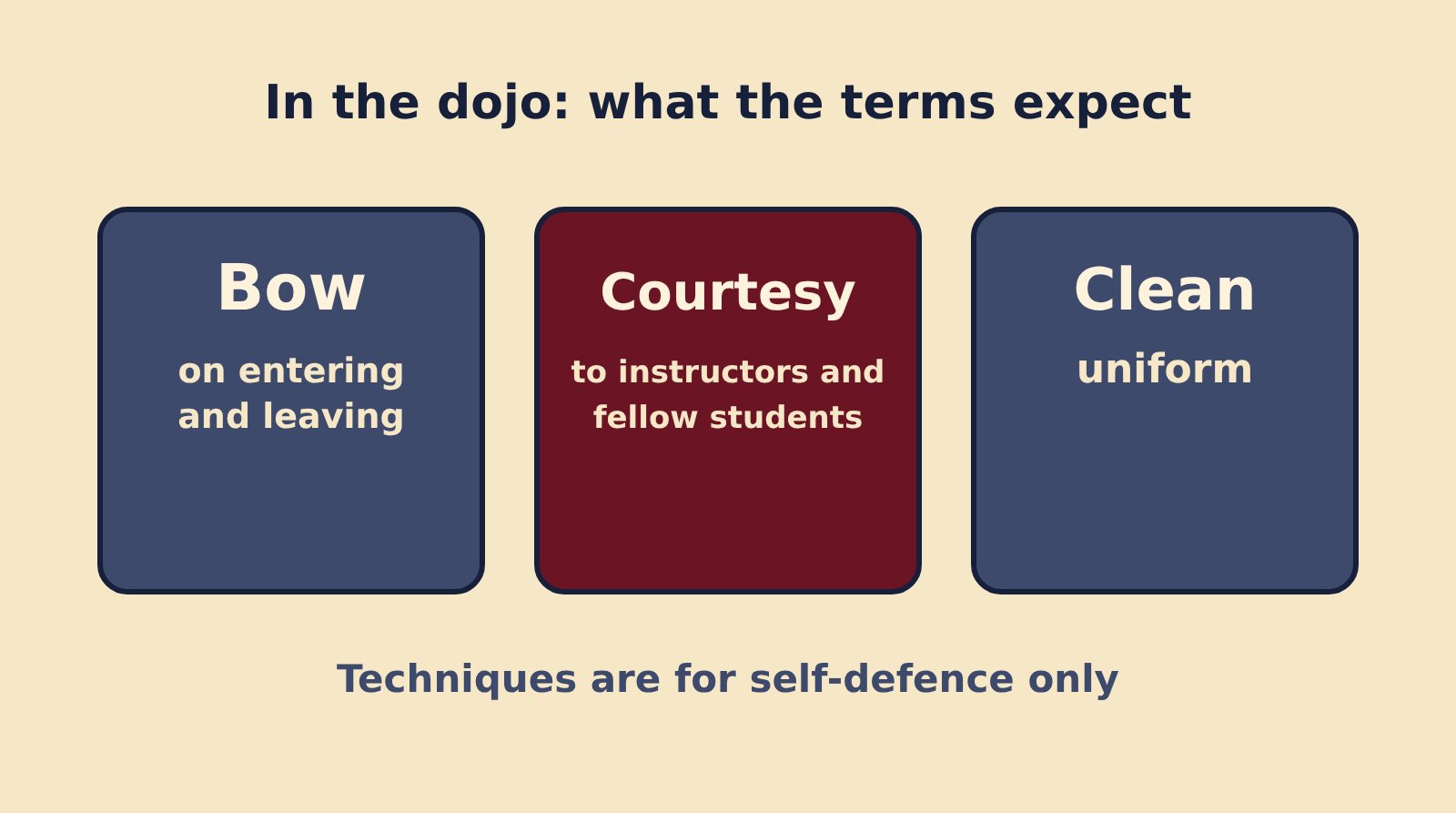
The etiquette section says “Respect is at the centre of Seibukan karate” and sets out what that means. The dojo expects every student to:
- be courteous to instructors and fellow students;
- bow on entering and leaving the dojo;
- keep a clean uniform.
It adds that “karate techniques are for self-defence only and must never be used to bully or harm others”, and that the dojo “may refuse entry to, or ask to leave, anyone who puts others at risk or behaves disrespectfully”. A dojo, as we explained in our glossary of the words on the site, is the training hall. The same line on respect runs through our post on what respect means in a class.
If someone gets hurt
The terms say “Accidental injuries in New Zealand are covered by ACC.” They also say that, to the extent the law allows, the dojo is not liable for injury, loss or damage during training, “except where it is caused by our negligence”, and that nothing in the terms limits your rights under the Consumer Guarantees Act 1993 or other New Zealand law. In plain words, you are asked to tell an instructor straight away, and the terms point to ACC for accidental injuries.
What the terms do not say is what the dojo does when someone is hurt: whether there is a first-aid kit, an incident record, or a process for telling parents. It is a reasonable thing to ask, especially if you are booking for a child.
Grading and progress
One more rule shapes how training goes. The terms say “Students grade when their instructor considers them ready.” Coloured-belt gradings are run by IOSSKA-NZ, black belt ranks are certified by the IOSSKA, and “passing a grading is not guaranteed”. Our post on how belt grading works sets out the rest of what the site says, including that grading is held about every six months and charged separately.
What the terms do not cover
These are gaps, not criticisms. A short page cannot say everything, and the answers are easy to get by asking:
- The terms do not say whether students train barefoot or in anything on their feet, or what to do about long hair.
- They do not say what happens if you arrive late, beyond asking you to arrive 10 minutes early.
- They do not say when a new student is expected to have a uniform, only that you do not need one for trial classes.
- They do not say what is done when someone is hurt, as above.
These are our suggestions for the call, not the dojo’s wording: ask what to wear on your feet, when the uniform is needed and where to get it, and what the process is if a child is hurt.

How to try it
- Book. Call 029 128 0873 or fill in the booking form. An instructor will call within one working day. Tell them about any injury or medication and ask the questions above.
- Wear comfortable clothes you can move in, with jewellery off and nails short. You do not need a uniform for trial classes. For what the evening involves, see what to expect at your first class.
- Arrive 10 minutes early on a Wednesday or Friday, 6 to 7pm, at Ōrākei Community Centre, 156 Kepa Road. The current term runs from 7 October to 18 December, and bookings for next year will be announced shortly.
Frequently asked questions
What do I need to do before my first class?
The terms ask you to tell your instructor about any medical condition, injury or medication, remove jewellery and keep fingernails and toenails short. The site asks you to wear comfortable clothes you can move in and arrive 10 minutes early.
Do I have to bow?
The terms say the dojo expects every student to bow on entering and leaving the dojo, to be courteous to instructors and fellow students, and to keep a clean uniform.
What if I get hurt in class?
The terms say to stop and tell an instructor straight away, and that accidental injuries in New Zealand are covered by ACC. They do not describe the dojo’s process, so ask when you book.
Can the dojo ask someone to leave?
Yes. The terms say the dojo may refuse entry to, or ask to leave, anyone who puts others at risk or behaves disrespectfully.
Is passing a grading guaranteed?
No. The terms say students grade when their instructor considers them ready, and that passing a grading is not guaranteed.
Sources
- Terms and Conditions, IOSSKA-NZ: health, safety and injury, children, dojo etiquette and conduct, gradings and rank (last updated 29 September 2026, checked November 2026).
- IOSSKA-NZ, seibukan.co.nz: trial class guidance, class times, venue and term dates (checked November 2026).
Ready to try it? Your first two classes are free: Wednesdays and Fridays, 6 to 7pm, at Ōrākei Community Centre. Call now or fill in the form.