You are not 12, and you are not sure you are in the shape you would like to be in. You may have thought about karate for years, perhaps since you watched your own kids, or a film, or a colleague who trains. And then the doubts: I am too old to start. I am not flexible. Everyone else will be younger and fitter. I will be the one who gets it wrong.
This post is for the adult who is starting later than they imagined. It sets out what the IOSSKA-NZ dojo at the Ōrākei Community Centre says about who can train, what New Zealand health guidance says about starting out, and what the site leaves unsaid, so that you know what to ask before you walk in. Dojo facts are from its own site, checked in October 2026.
What the dojo says about who can train
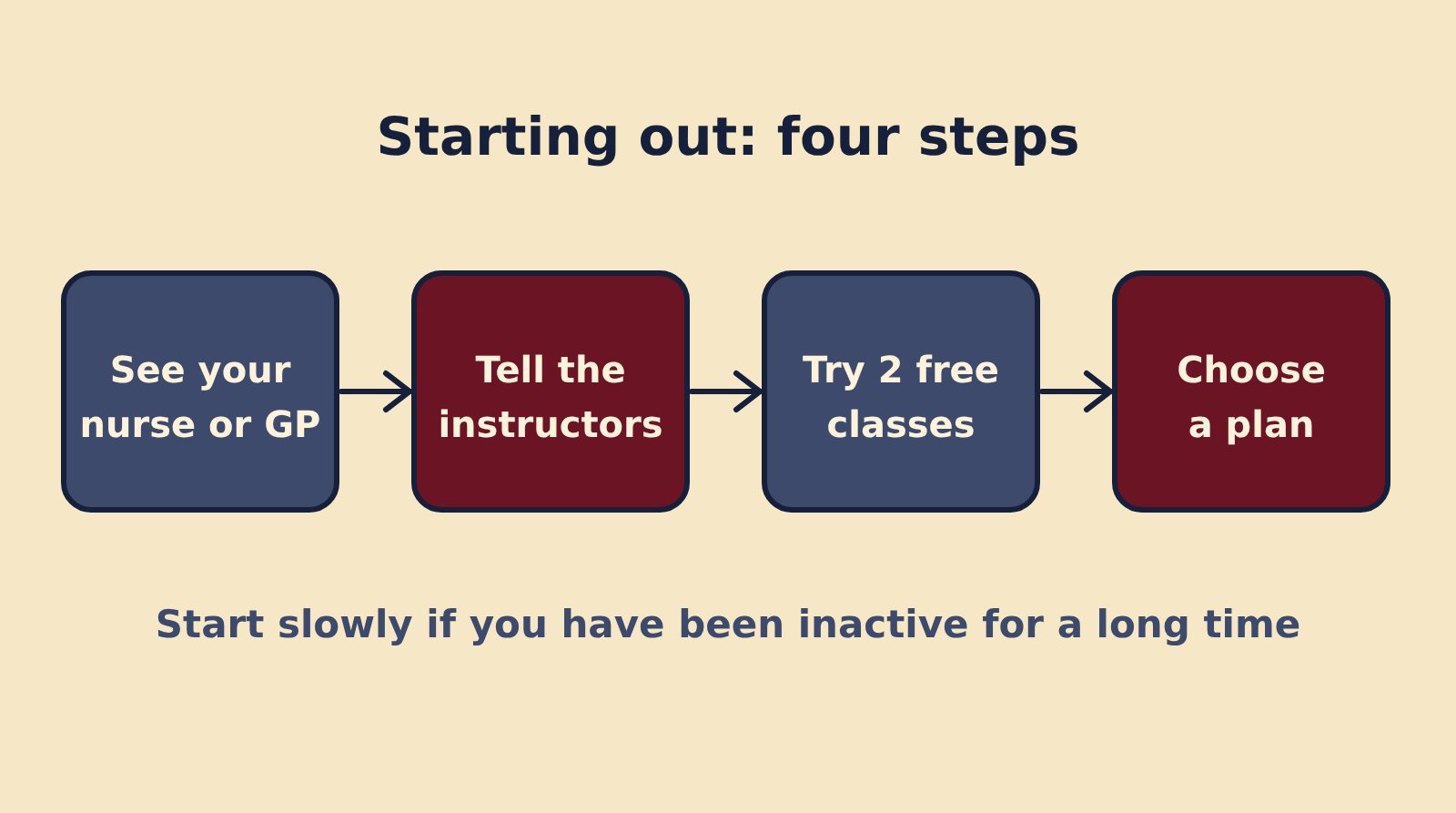
The dojo says classes are open to all ages, and describes the Teens & Adults program (ages 15 to 64) as “Traditional kata, kihon and kumite. Get fit, de-stress and learn real self-defence, with a clear path to black belt.” Beginners are the point of a free trial. The first two classes cost nothing and carry no obligation, so you can find out whether you belong before you commit.
The site does not say how old its adult students typically are, and we are not going to guess. Nor does it say whether adults train in the same group as teenagers. Both are fair questions for the instructor who calls you. If you are 65 or over, there is a separate Seniors program, described as training at your own pace.
What health guidance says about starting
Health NZ’s page on being physically active says “doing any physical activity is good for your health”, and that activities you enjoy, especially with others, can make it easier to stay active. It says physical activity can help you manage anxiety, depression and stress.
The HealthEd leaflet Be active every day is more practical. It says to “start slowly if you have been inactive for a long time”, and to “talk to your doctor or nurse if it’s been a long time since you were active or if you have any health problems”. The weekly aim for adults is “at least 2½ hours of moderate or 1¼ hours of vigorous physical activity spread throughout the week”, plus muscle strengthening at least twice a week.
The Mental Health Foundation’s guide to starting physical movement says “you don’t have to exercise to exhaustion to enjoy the benefits of moving your body”. None of these sources mention karate, and none say a karate class suits any particular age. They are a reminder that starting slowly and checking with a health professional first are the standard advice.
Telling the instructors
The dojo asks every student to “tell us about any injury or health condition before class so we can train you safely”. For an adult starting later, that is the most useful sentence on the site. An old knee, a bad back, a recent operation, a heart or blood-pressure condition: the instructors can only adjust what they know about. The dojo says respect and discipline are at the centre of its karate. A student who says “I have a dodgy shoulder” is respecting the room, not showing weakness.
Flexibility, and the pace of a class
Many adults fear that they are not flexible enough. The site does not list a flexibility requirement, and says nothing about a fitness test. What it does say is that the training is built from kihon, the basics, which Wikipedia says tend to be practised often, “in many cases during each practice session”. Basics done often are, for a beginner, the gentlest way in. How the instructors adjust a stance or a kick for a stiff hip, and what the pace of a class is, the site does not say. Ask.
Our post on whether karate is a good workout goes through the arithmetic: a one-hour class on one or two nights is a good part of a week, but not the whole of what the guidance asks, so most adults will want to add a walk or a ride.
One day or two?
This is the choice an adult starting later most needs to think about, and the dojo is open about it. It recommends two days a week for the best results, and says one day a week gives slower progress. It also says students can switch between the plans.
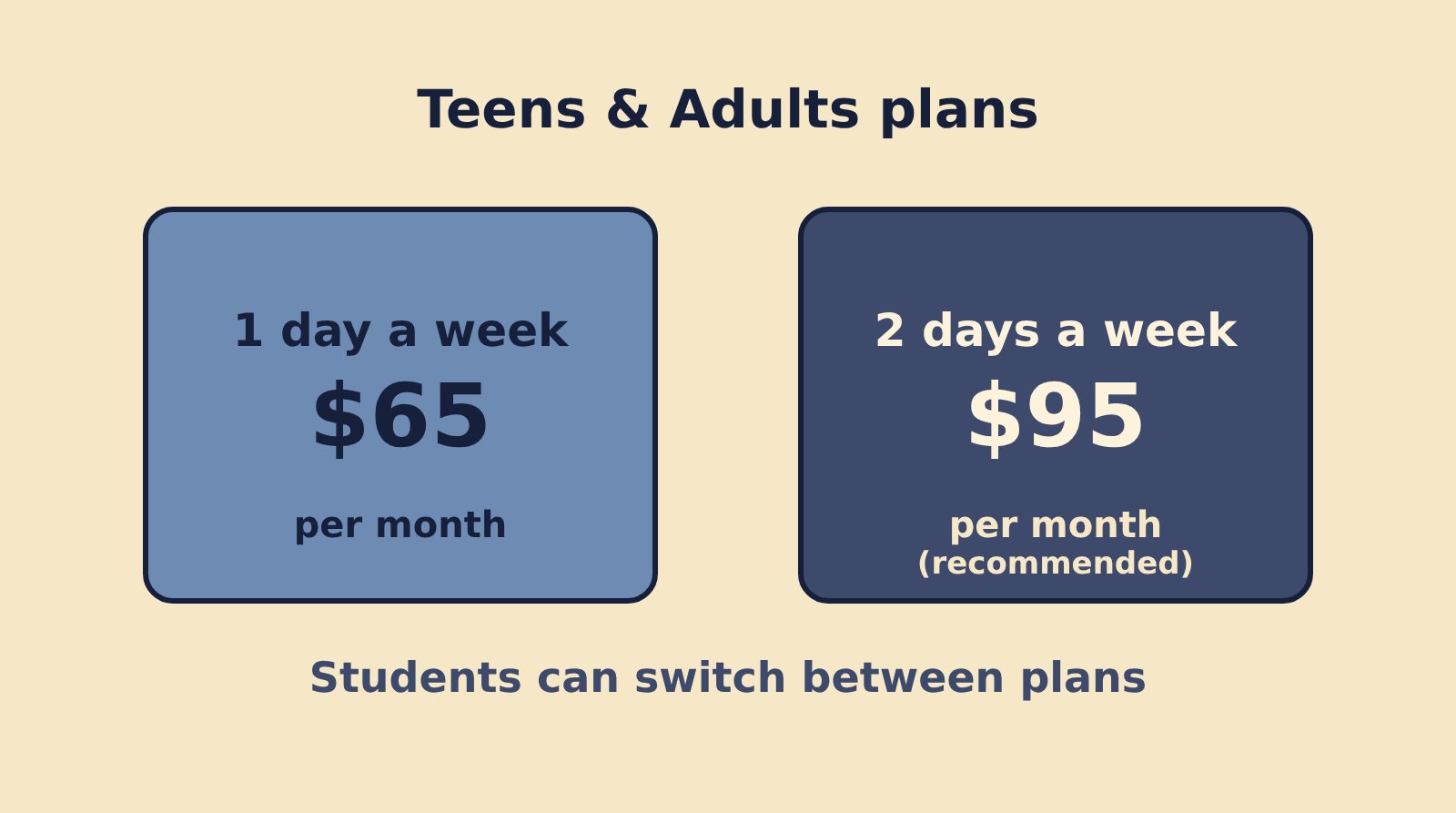
Our reading, not the dojo’s, is that if you have been inactive for a long time, one night a week while your body adapts, then two, is consistent with the “start slowly” advice above. If you feel good, the recommended plan is two. You are not locked in, and the first two classes are free, so you can test both nights before you choose.
What it costs
All prices are from the dojo’s site, in NZD, per person, per month.
| What | Cost |
|---|---|
| First 2 classes | Free, with no obligation |
| Teens & Adults (15 to 64), 2 days a week (Wednesday and Friday), recommended | $95 per month |
| Teens & Adults, 1 day a week (Wednesday or Friday) | $65 per month |
| Joining fee | $20, one-off, covers your passbook |
| Family discount | 50% off the monthly fee for every additional family member, on either plan |
| Gi, badge and belt | Not included |
| Grading | Charged separately, held approximately every 6 months |
The passbook lets you train at any IOSSKA dojo worldwide. If a partner or a grown-up child would like to come with you, the family discount applies to either plan.

How to try it
- Check with your doctor or nurse if it has been a long time since you were active or you have any health problems.
- Book. Call 029 128 0873 or fill in the booking form. Mention any injury or health condition, and ask whether adults and teenagers train together.
- Wear comfortable clothes you can move in. You do not need a uniform for trial classes.
- Arrive 10 minutes early on a Wednesday or Friday, 6 to 7pm, for a welcome and a walk through the basics. The current term runs from 7 October to 18 December, and bookings for next year will be announced shortly.
For what the first evening involves, see what to expect at your first class.
Frequently asked questions
Am I too old to start karate?
The dojo says classes are open to all ages, with Teens & Adults covering 15 to 64 and a separate Seniors program for 65 and over. The site does not give a typical age for beginners, so ask the instructors.
Do I need to be flexible or fit first?
The site does not list a flexibility or fitness requirement. If you have been inactive for a long time, HealthEd advises starting slowly and talking to your doctor or nurse first.
Should I train one day or two days a week?
The dojo recommends two days a week for the best results and says one day gives slower progress. Students can switch between plans, so you can start with one night and add the second.
Should I tell the instructors about an injury?
Yes. The dojo asks you to tell the instructors about any injury or health condition before class so they can train you safely.
How much does it cost?
The first two classes are free. After that it is $95 a month for two days a week (recommended) or $65 a month for one day, plus a one-off $20 joining fee. The gi, badge and belt are extra, and grading is charged separately.
Sources
- IOSSKA-NZ, seibukan.co.nz: programs, class times, venue, pricing, plans, safety wording and booking (checked October 2026).
- Being physically active, Health NZ: benefits of activity.
- Be active every day: physical activity for adults, HealthEd: weekly aims, starting slowly, talking to a doctor or nurse.
- A guide to starting physical movement, Mental Health Foundation of New Zealand: starting gently.
- Kihon, Wikipedia: term meaning and frequency of practice.
Ready to try it? Your first two classes are free: Wednesdays and Fridays, 6 to 7pm, at Ōrākei Community Centre. Call now or fill in the form.