A line on the dojo’s site stops many first-time visitors for a second. “As our Supreme Sensei teaches, karate is not a sport. Real self-defence, focus and self-belief.” For some it is a relief. For others it raises a question: if it is not a sport, then what is it, and what will I actually be doing on a Wednesday night?
This post reads the dojo’s own words slowly, one phrase at a time, and asks what each means for a student. It is our reading of the dojo’s description, not a statement from the dojo, and it only uses what the dojo’s site says. Dojo facts are from seibukan.co.nz, checked in October 2026.
“Kata, kihon and kumite”
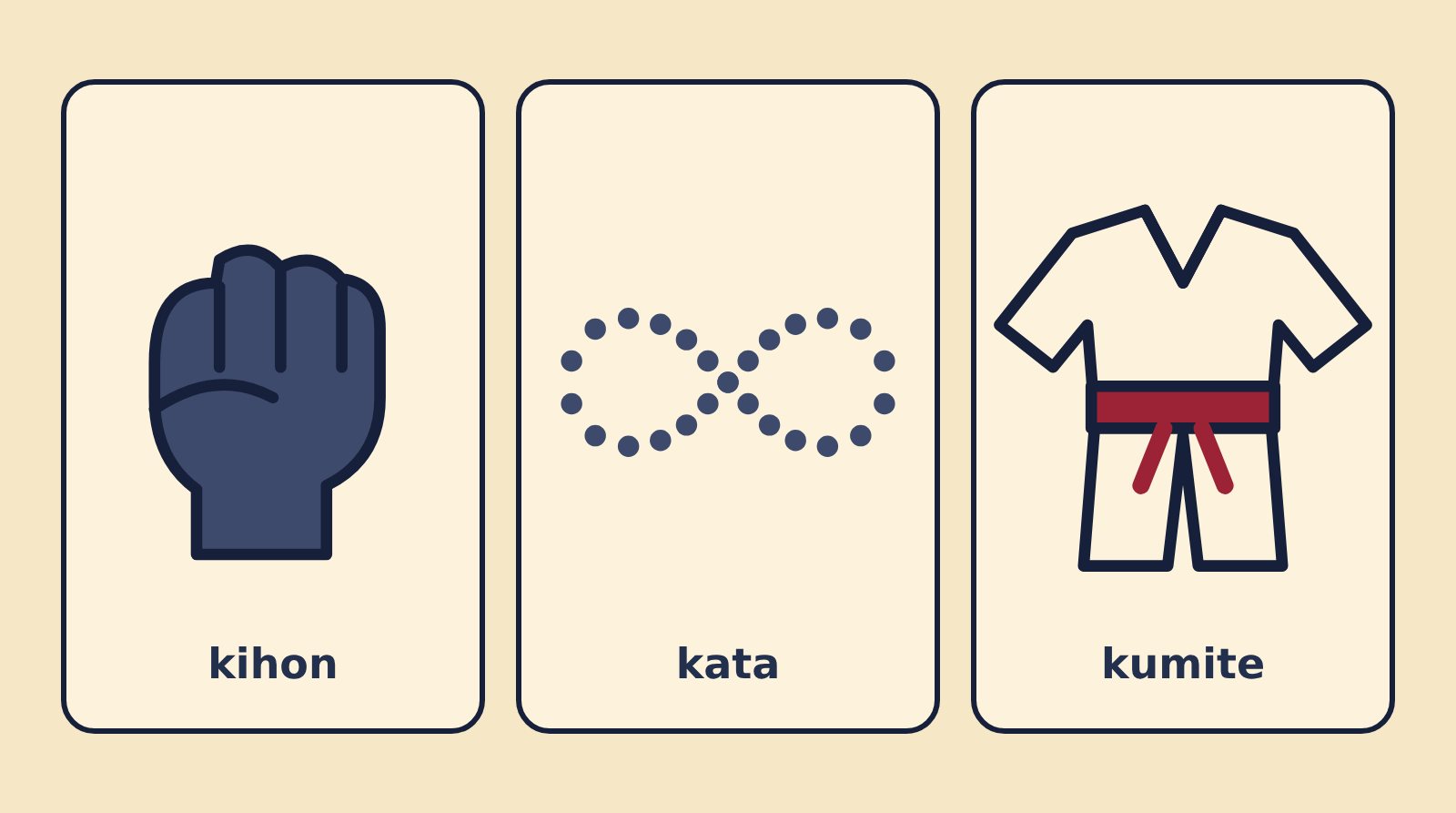
The dojo says its karate is “still taught the traditional way: kata, kihon and kumite, with respect at the centre of everything”. Those are the three parts of the training. Wikipedia defines kihon as “basics” or “fundamentals”, and says kata is “a detailed choreographed pattern of martial arts movements”. Kumite is “one of the three main sections of karate training, along with kata and kihon”, and in plain words it is training with a partner.
For a student, that means a class built from basics, set patterns and partner work, and not a class of games or drills for their own sake. The site lists the kata the dojo teaches, and gradings come around approximately every six months. So there is a defined body of material, and a regular marker of progress.
“Respect at the centre of everything”
The FAQ repeats the point: “Respect and discipline are at the centre of Seibukan karate.” For a student, respect is not decoration. It shapes how you behave in the room, how you treat the person you train with, and how you receive correction from an instructor. If you are new, the simplest guide is the one in our post on what to expect at your first class: if you are unsure what to do, follow the person next to you.
“Real self-defence”
This is the phrase that deserves the most care. The dojo says its Teens & Adults class will help you “learn real self-defence”, and describes a separate Defense for Women class as “practical, confidence-building self-defence for women”. We have written separately about what that can and cannot promise: see Is karate realistic self-defence? An honest look. The short version is that nobody can guarantee an outcome, New Zealand Police advise that avoiding trouble and getting to safety come first, and a class gives you practice rather than a promise.
“Focus and self-belief”
These are the quieter words in the sentence, and for many students the more important ones. We have not found independent evidence that karate builds either, so we will not claim it does. What we can say is that Health NZ’s guide for school-aged children lists self-confidence, social skills and emotional control among the things regular activity can help with, in its resource Sit less, move more, sleep well (HE2312), Health NZ. And the Mental Health Foundation says movement can “increase our sense of achievement and confidence”. Both are about physical activity in general.
What a dojo adds, at its best, is a place to practise paying attention. Learning a kata asks you to hold a pattern in your head and your body at once. Training with a partner asks you to notice someone else. Whether that builds focus for you is something only your own experience can tell you.
“Precise and powerful, and also requires speed and agility”
When the FAQ asks what Seibukan karate is, it answers that it “is precise and powerful, and also requires speed and agility”. It also describes Seibukan as the Sukunaihayashi style of Shorin-ryu, founded in 1962. For a student, the practical message is that the training values doing a movement correctly before doing it fast. The dojo’s own pace guidance points the same way: its classes are beginner-friendly, and you train at your own pace.
The same thread across the programs
Read across the dojo’s program descriptions and the same themes keep appearing. Juniors: “Confidence, discipline and anti-bullying skills for school-aged children.” Teens & Adults: “Get fit, de-stress and learn real self-defence.” Seniors: “Traditional training at your own pace. Balance, strength and a sharp mind.” Defense for Women: “Practical, confidence-building self-defence for women.” Different ages, different words, but a common emphasis on confidence, discipline, and training that suits the person in front of the instructor. That is our reading of the site’s wording, and it fits the sentence about what karate is.
What it does not tell you
A few sentences on a website can only say so much. They do not say how a class is structured minute by minute, how the instructors handle a student who is struggling, or what happens at a grading. Those are questions for the instructors. And a philosophy is only as good as the way it shows up in the room. The first two classes are free so you can see for yourself.
How to try it
- Book. Call 029 128 0873 or fill in the booking form. An instructor will call within one working day. Ask what a class looks like.
- Wear comfortable clothes you can move in. A uniform is not needed yet.
- Arrive 10 minutes early, on a Wednesday or Friday, 6 to 7pm. The current term runs from 7 October to 18 December.
The dojo’s site gives monthly prices of $95 for Teens & Adults on two days a week (recommended) or $65 on one day, $85 or $55 for Juniors and Seniors, plus a one-off $20 joining fee that covers a passbook. The gi, badge and belt are extra, and grading is charged separately. Every additional family member gets 50% off. Prices are in NZD.
Frequently asked questions
Why does the dojo say karate is not a sport?
The dojo’s site attributes the line to its Supreme Sensei: karate is not a sport, but real self-defence, focus and self-belief. It does not expand on the line, so ask the instructors what it means in class.
What are kata, kihon and kumite?
They are the three parts of karate training the dojo names. Kihon means basics or fundamentals, kata is a detailed pattern of movements, and kumite is training with a partner.
Does karate build focus and self-belief?
The dojo says that is part of its aim, but we have found no independent evidence either way. Health NZ and the Mental Health Foundation say regular physical activity can help with confidence and wellbeing in general.
What does the dojo mean by respect?
The dojo says respect and discipline are at the centre of Seibukan karate. In class, that means courtesy to instructors and fellow students. The instructors will show you what to do.
Do I need any experience to start?
No. The dojo says its classes are beginner-friendly and you train at your own pace. Your first two classes are free.
Sources
- IOSSKA-NZ, seibukan.co.nz: philosophy wording, FAQ answers, program descriptions and pricing (checked October 2026).
- Kihon, Wikipedia, Kata, Wikipedia and Kumite, Wikipedia: meanings of the three terms.
- Sit less, move more, sleep well (HE2312), Health NZ: confidence, social skills and emotional control.
- Starting physical movement, Mental Health Foundation of New Zealand: achievement and confidence.
Curious about training? Your first two classes are free: Wednesdays and Fridays, 6 to 7pm, at Ōrākei Community Centre. Call now or fill in the form.