It is a small thing, usually. A wobble on the bottom step, a hand reaching for the bench, a moment when the ground was not quite where you expected. Afterwards you think about it for longer than the moment deserved. If you are 65 or over, or you are the son or daughter of someone who is, balance stops being something you take for granted, and you start to look for ways to keep it.
The IOSSKA-NZ dojo at the Ōrākei Community Centre, 156 Kepa Road, runs a Seniors program for ages 65 and over. Its own one-line description mentions balance. This post looks at what that does and does not mean. It sets what national health sources say about balance, strength and falls beside what the dojo says, and is plain about where the dojo’s site stops. Dojo facts are from its own site, checked in October 2026.
What the dojo says
The dojo describes the Seniors program in one line: “Traditional training at your own pace. Balance, strength and a sharp mind.” That is the whole of it. The site does not say how classes are adapted for older students, whether any part of a class is done on the floor, whether there are chairs or rest breaks, or how the pace is set. We have covered the program more fully in karate for seniors at the Ōrākei dojo, and the practical side of getting to the hall in karate near St Heliers.
What the health sources say about balance and falls
The Live Stronger for Longer website, which points older people to community strength and balance classes, says “falls are the most common cause of injury in older adults”. It adds that “regular exercise helps to increase your movement and reduce your chances of a fall”, and that “we all need to maintain strength and balance as we age”. It describes community strength and balance classes as being about “connection, confidence, and staying steady on your feet”, and offers a “find a class near you” tool.
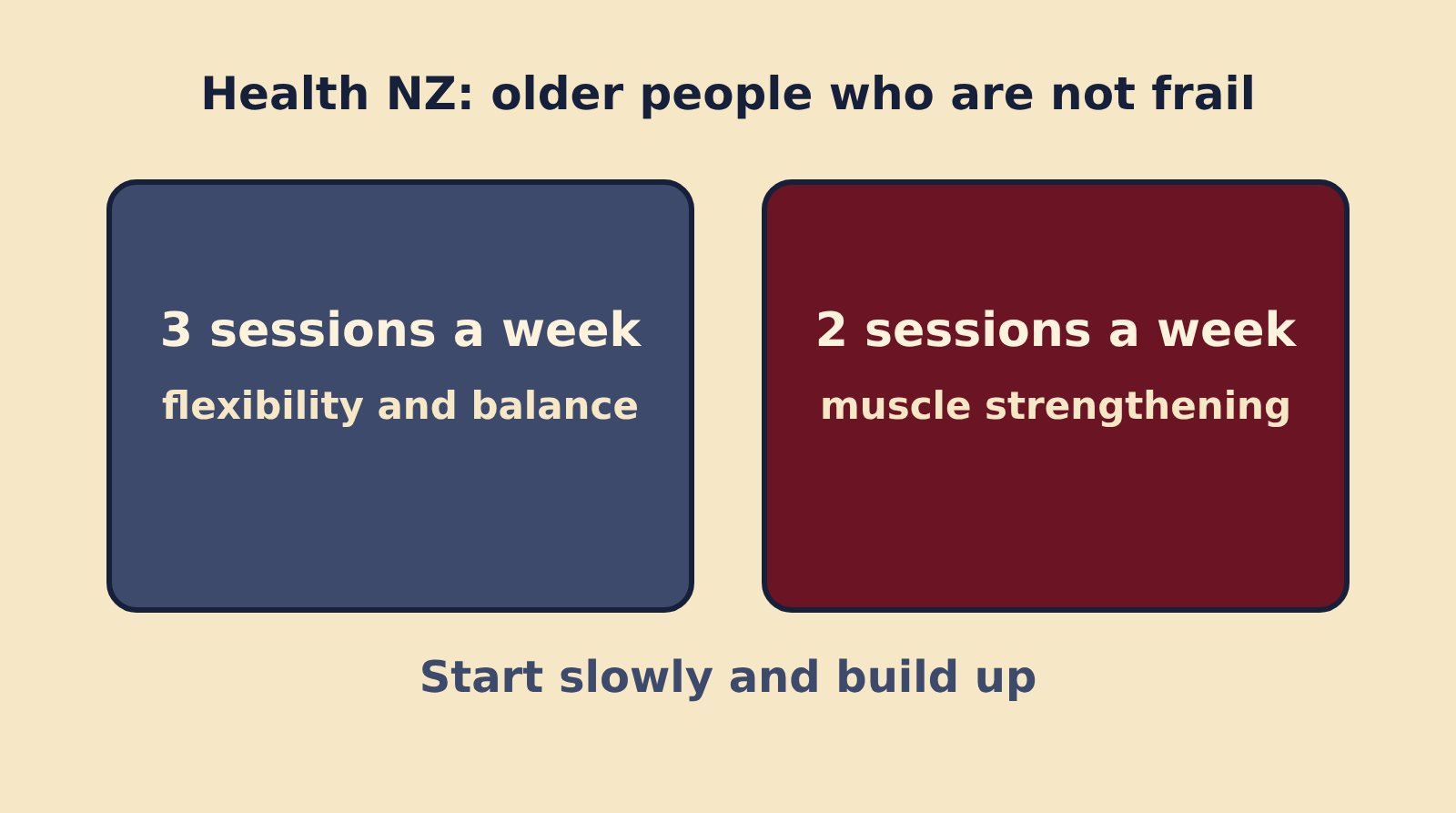
Health NZ’s page on being physically active gives older people who are not frail a weekly pattern: “3 sessions of flexibility and balance activities, and 2 sessions of muscle-strengthening activities per week”. It says they should “start off slowly and build up”, and “consult an appropriate health professional before starting or increasing physical activity”. The Ministry of Health’s older-people factsheet, Physical Activity for Older People (aged 65 years and over), says regular activity “helps to reduce the risk of falls”.
Where karate fits, and where it does not
This is the honest part. None of those sources mention karate. We have found no independent evidence that a karate class prevents falls, and we are not going to claim that it does. The dojo itself lists balance and strength among the aims of its Seniors program, but it does not say that classes are designed as falls-prevention, or how they are structured to work on balance.
What we can say is narrower. Karate training, as the dojo describes it, is built from kihon, the basics, and kata, set sequences of movement. Both involve standing, stepping and turning in a controlled way, repeated often. Whether that suits your balance, and at what pace, is a question for the instructors and for your own health professional. If your main goal is falls prevention, it is reasonable to look at the community strength and balance classes too. A karate class and a falls-prevention class are not the same thing, and you might do both.
Questions to ask the instructors
These are our suggestions, not the dojo’s wording:
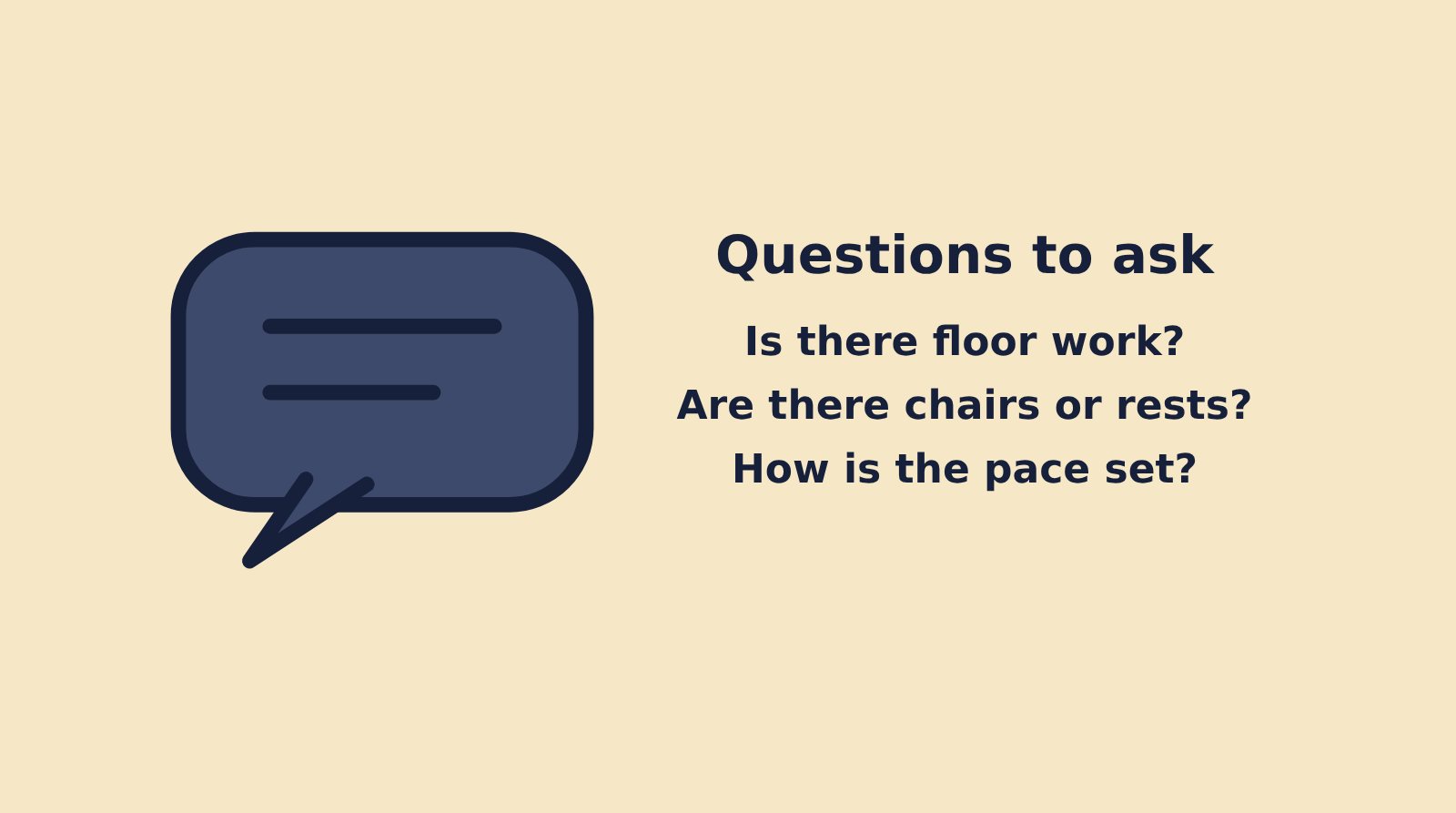
- Is any part of a class done on the floor, and is it optional?
- Are there chairs, or rests, if I need to stop?
- How is the pace set when students of different ages and fitness train together?
- How are stances and turns adjusted for a knee, hip or balance problem?
- Is there a hand or a wall to hold during one-leg practice?
The dojo says respect and discipline are at the centre of its karate, and asks you to “tell us about any injury or health condition before class so we can train you safely”. For someone with a history of falls, a joint replacement, dizziness or a heart condition, that conversation is the most important part of the first call.
Check with your GP first
Health NZ’s advice is to consult an appropriate health professional before starting or increasing physical activity. The Ministry’s factsheet adds that people who are inactive, or who have one or more health conditions, “should seek advice from an appropriate health practitioner before starting or increasing levels of activity”. Booking a short appointment first is sensible, and the questions from that visit are good ones to bring to the instructors. That is our suggestion, not a requirement from the dojo.
What it costs
All prices are from the dojo’s site, in NZD, per person, per month.
| What | Cost |
|---|---|
| First 2 classes | Free, with no obligation |
| Seniors (65+), 2 days a week (Wednesday and Friday), recommended | $85 per month |
| Seniors, 1 day a week (Wednesday or Friday) | $55 per month |
| Joining fee | $20, one-off, covers your passbook |
| Family discount | 50% off the monthly fee for every additional family member, on either plan |
| Gi, badge and belt | Not included |
| Grading | Charged separately, held approximately every 6 months |
The dojo recommends two days a week and says one day gives slower progress. Students can switch between plans, so starting with one night and building up is possible, which fits the “start slowly” advice above.

How to try it
- Book. Call 029 128 0873 or fill in the booking form. Mention any injury, fall or health condition, and ask the questions above.
- Wear comfortable clothes you can move in. You do not need a uniform for trial classes.
- Arrive 10 minutes early on a Wednesday or Friday, 6 to 7pm. The current term runs from 7 October to 18 December, and bookings for next year will be announced shortly.
Frequently asked questions
Will karate help my balance?
The dojo lists balance among the aims of its Seniors program. We have found no independent evidence that a karate class reduces falls, so we make no such claim. Ask the instructors how classes work on balance, and ask your GP what suits you.
Is karate a falls-prevention program?
No. The dojo does not describe it as one. Community strength and balance classes exist for that purpose, and the Live Stronger for Longer site offers a tool to find one.
Should I see my GP before starting?
Health NZ advises older people to consult an appropriate health professional before starting or increasing physical activity, and to start slowly and build up.
How much does the Seniors program cost?
The first two classes are free. After that it is $85 a month for two days a week (recommended) or $55 a month for one day, plus a one-off $20 joining fee. The gi, badge and belt are extra, and grading is charged separately.
When are the classes?
Wednesdays and Fridays, 6 to 7pm, at Ōrākei Community Centre, 156 Kepa Road. The current term runs from 7 October to 18 December.
Sources
- IOSSKA-NZ, seibukan.co.nz: Seniors program, class times, venue, pricing, safety wording and booking (checked October 2026).
- Live Stronger for Longer: falls as the most common injury in older adults, strength and balance classes.
- Being physically active, Health NZ: weekly pattern for older people, starting slowly, consulting a health professional.
- Physical Activity for Older People (aged 65 years and over), Ministry of Health factsheet: activity and the risk of falls. The file is dated January 2013, so check for a newer version.
- Kihon and Kata, Wikipedia: term meanings only.
Ready to try it? Your first two classes are free: Wednesdays and Fridays, 6 to 7pm, at Ōrākei Community Centre. Call now or fill in the form.